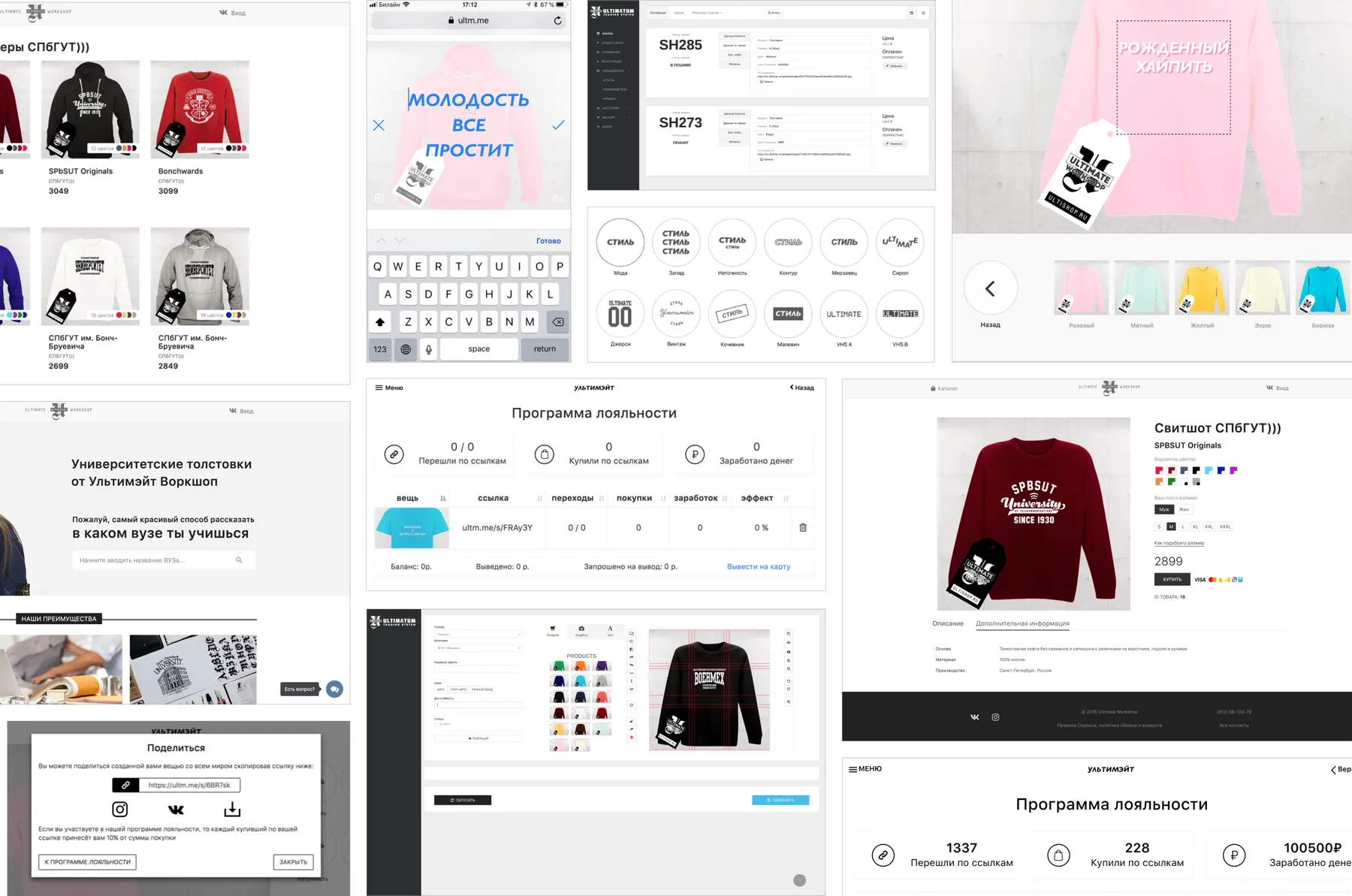
On different stages of product, we were solving three different main problems:
Problem
- Most Russian universities doesn't have any branded apparel
- There is no "Uber solution" for clothing production on demand
- Global brands doesn't know enough about current fashion in certain regions and supply a lot of unclaimed merchandise for which later sellers have to make discounts
My role
Finding a niche in the market, business planning, organising team, finding vendors, market research, user research, Product Design, SMM, SEO, business process modelling, context advertising, customer support, graphic design.
Results
- Really big amount of experience for freshmen in IT (just take a look at the whole article)
- Totally done on bootstrapping model with our own 400$ invested in the beginning
- More then 10000 orders successfully finished
- Dozen of university home tasks and projects covered with parts of this project
- Awarded with Scholarship of the President of the Russian Federation for undergraduate students studying in specialties corresponding to the priority areas of modernization and technological development of the Russian economy
- Two "Excellent" grades for bachelor theses: for CRM/ERP System and Online Customizer for Mikhail and me
- Sale of resulting product
Team
Dan - Product owner, UI/UX Designer, PR, Co-Founder
Mikhail - Co-founder, Full Stack Developer
Alina - Senior Sales Manager
Irina - Head of Production
Maxim - Head of Printing
Various sales managers, couriers, seamstresses, printsmen and sales agents.
Main purpose
In a traditional clothing market typically only 1/3 of produced clothes in each collection are sold on original price and brings most of the profit. 2/3 are sold with discount and doesn't bring significant profit. Mostly, producers are following trends set by higher fashion, media and statistical data from last season. There are no "test collections". Everything is made in fantastical amounts and shipped worldwide.
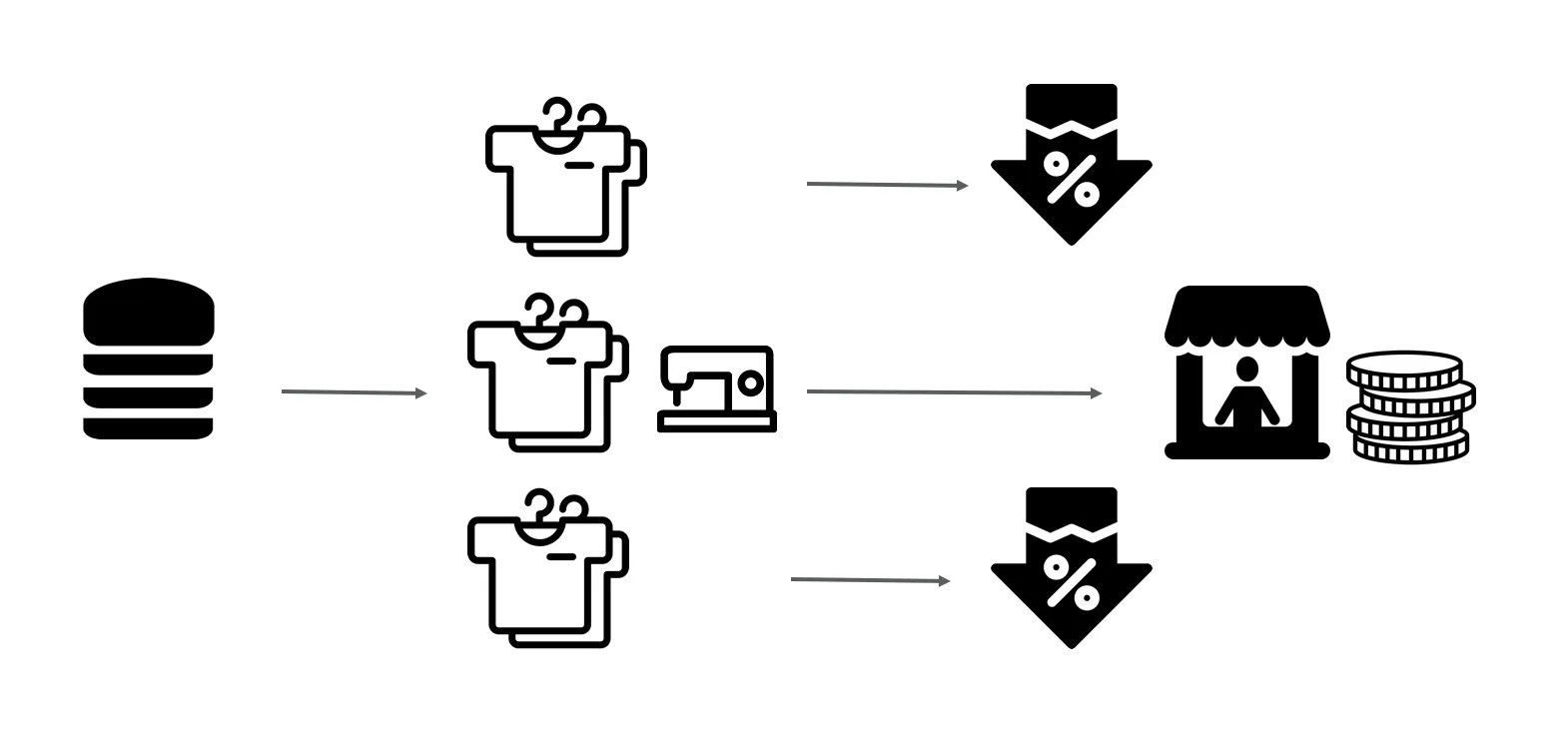
If we would have a consistent source of data, what kind of clothing people want to wear right now, it would give information of trends in a specific place and specific time and reduce the number of clothing produced to be discounted.
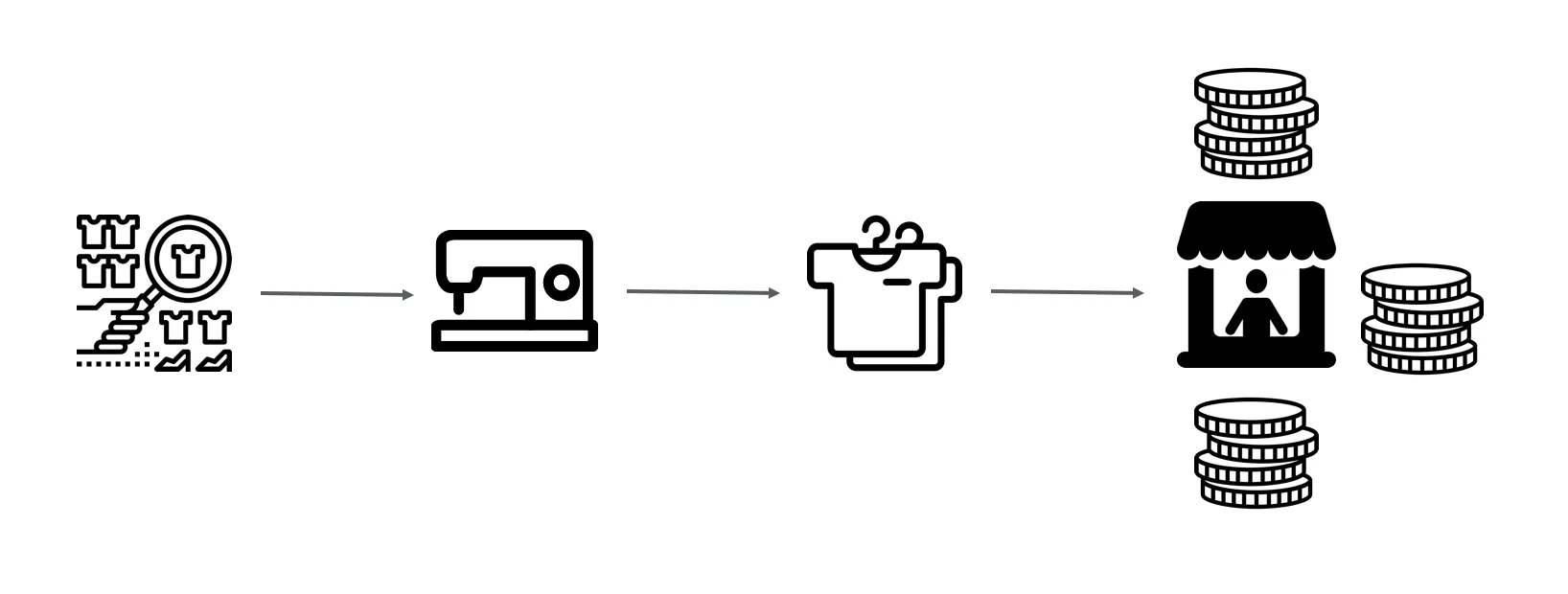
On ultm.me people could make clothes that look exactly how they want it, including style, fit, colour and even print.
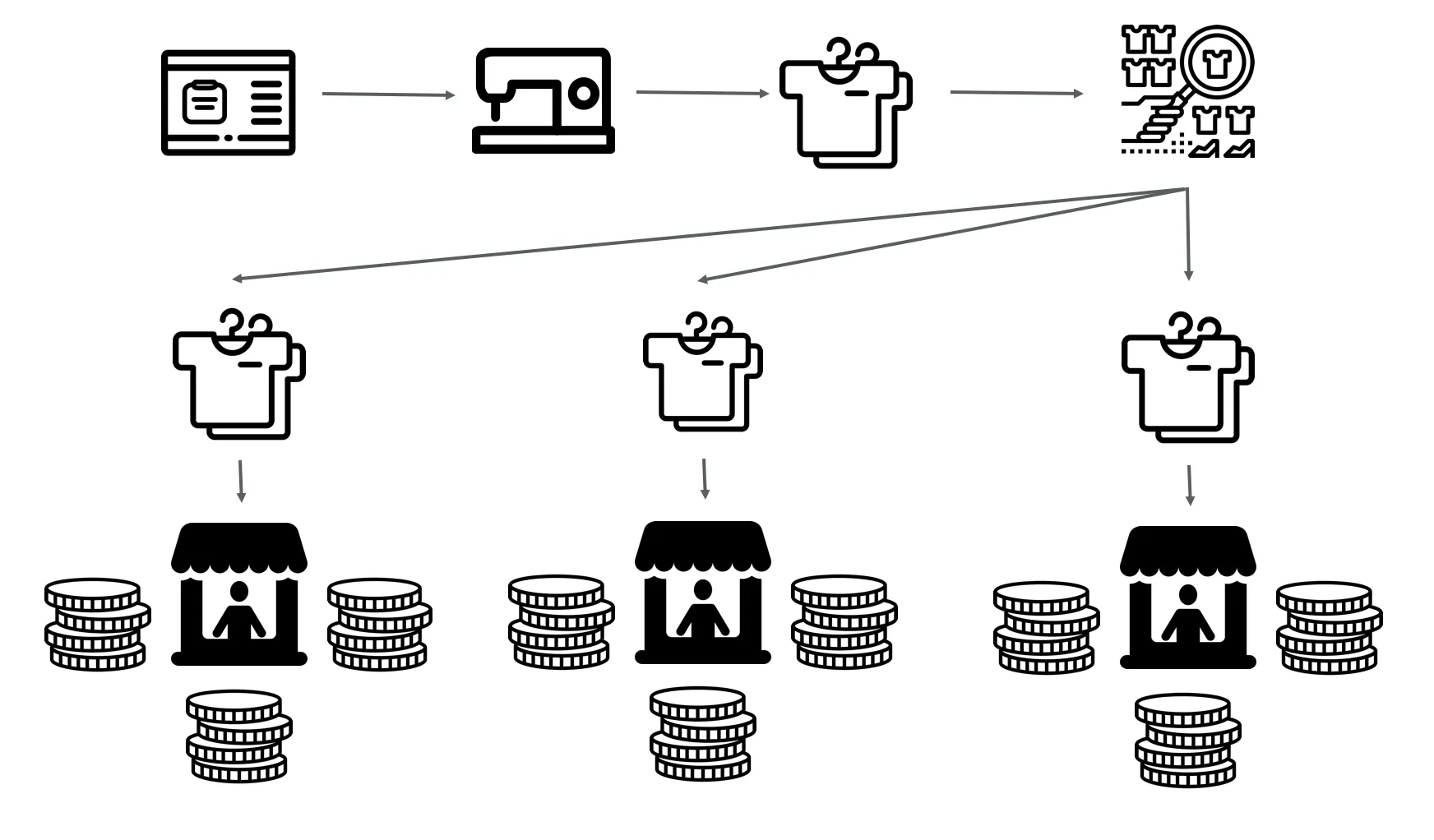
Story
University apparel workshop
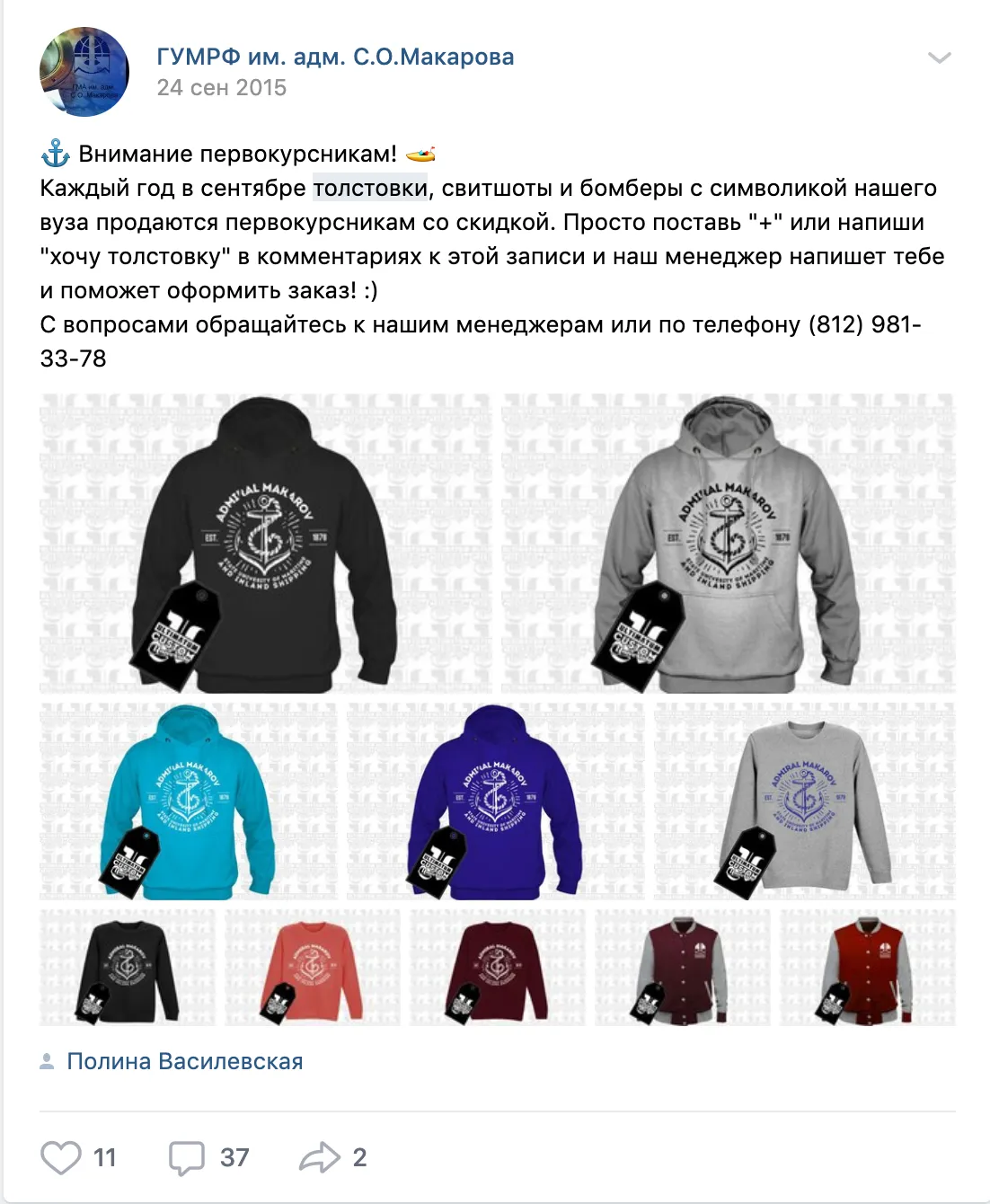
Everything started from a demand for university apparel - in summer of 2014 there was a trend for "Harvard" hoodies and varsity jackets came Ivy league universities. Most Russian universities didn't had any at the moment. I started to sell them with my former partner using our own advertisement techniques on vk.com using automatic bulk posts and paid promotions on university related public pages. I almost ran out of money because of my hitchhiking trips that summer and sold my iPhone and good laptop to buy an initial batch of garments and using only ancient Nokia phone and a horrible netbook capable only to run Chrome and a software for post automation, I've earned enough money to switch to my first macbook in just a month.
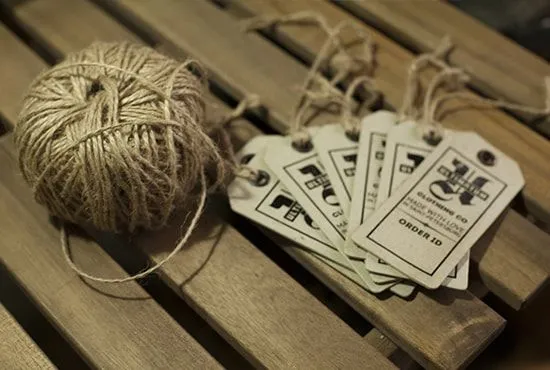
At first we were using prints using original university logos done by freelancers, but I was worried about copyright violation and I started to design them on my own from scratch. We got an exclusive contracts with few universities to be official university apparel vendor for them, acted as a sponsor at their events and constantly expanding our network of sales agents, who took orders from their course-mates and then delivered produced garments to university.
Our first ERP/CRM MVP
We used Google Spreadsheets for bookkeeping and order management. It took a lot of time and effort to handle with thousands of orders we had, so we started to develop our own ERP/CRM, called Ultimatum TS.
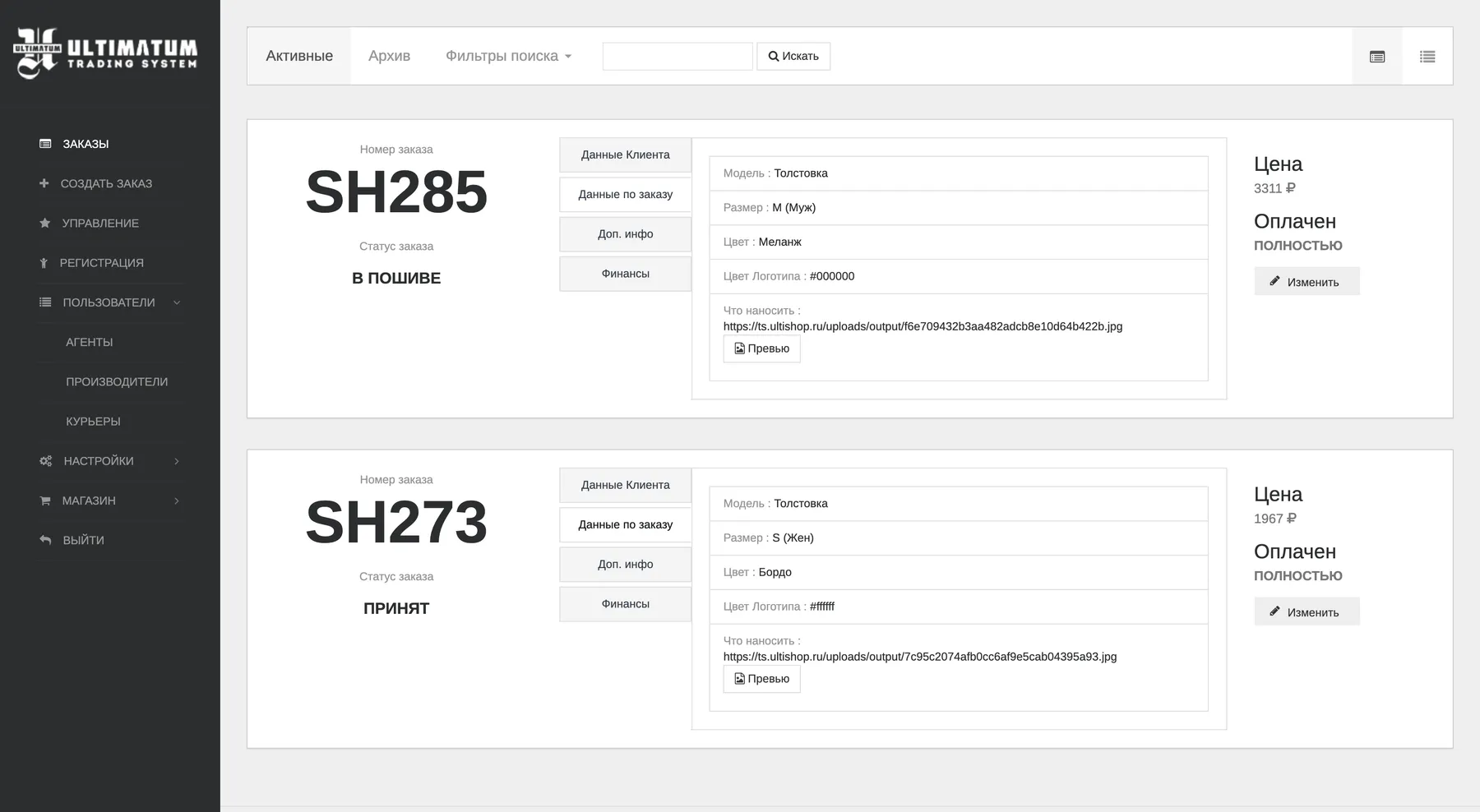
In the beginning it only had a few features:
- Manual order creation with all the customer and order data filled by admin with assignment to default sewing and printing vendor account
- Vendor account with access to assigned orders ID and information what to sew and which file to print
The design was based on paid template, but the whole thing was written on vanilla PHP and jQuery by my partner Mikhail with no frameworks used. Initially it doesn't involved a strong UX, because the project was made from a "better easier to develop" viewpoint. It had some UX disadvantages like too much order statuses and blocks in their changing mechanism (you can't easily mark "confirmed" status to "ready" without clicking on "in production" and "in printing"), that made our vendors to ignore it. They also didn't want to check out "Ultimatum TS" often enough and their e-mail was also clogged with SPAM.
Telegram bot for vendors
As soon as we noticed that problem, we decided to simplify status order status mechanism and made a bot for freshly released Telegram messenger.

In the beginning it just send a message with an order ID and "Ultimatem TS" link to our vendors, when new order for them was added. Later we added a few buttons with order number to mark order as ready. This small thing increased our order status validity rate up to 95% and decreased our time to complete each order.
Our own university apparel e-shop
Research
We've noticed that lots of pluses under our promo posts didn't lead to orders and decided to send these people a small Google Form where they would select an option, what exactly was the reason to abandon the purchase. To motivate people to complete it, we offered a secret gift, which was a time-limited discount code. Most people stated a lack of active full-functional website as a reason of distrust. Some people later used a coupon code and became our customers.
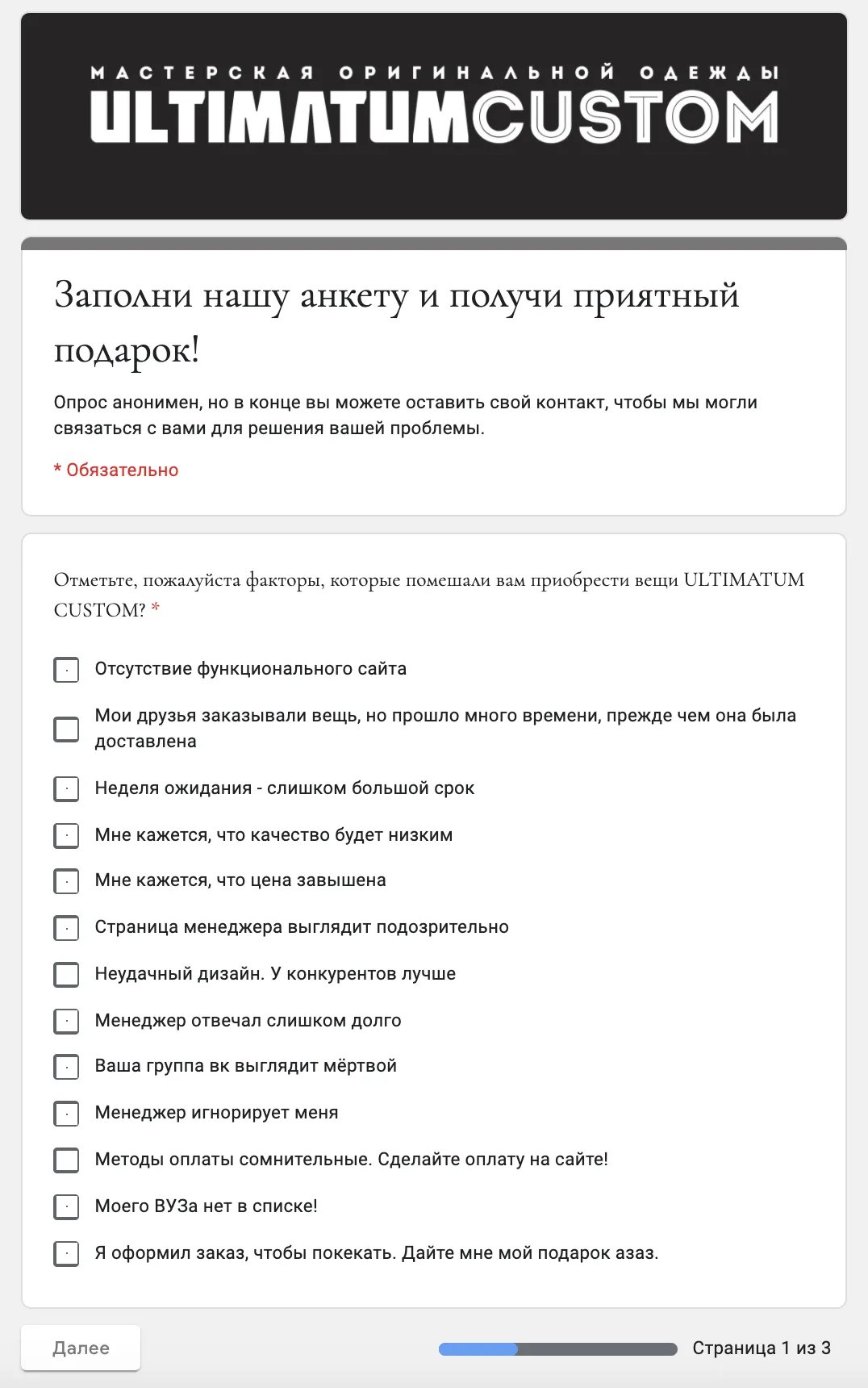
So, we decided to make our own shop. Connecting existing solutions with our Ultimatum TS was a pretty hard task to us and we were worried about a pretty high total number of our garments and print colours, which would require a lot of catalogue manager's effort. The next problem was that when we would not have a specific colour available, we would have to tick it off in each product page manually, which would result in lots of routine tasks. Probably it was a better solution, but we wanted to learn and decided to build our own shop.
Prototype
The first idea was to make a stepper style constructor, so I've made a design, but Mikhail convinced me to abandon this idea, because it was harder to develop then e-shop, stepper design have UX disadvantages to move between steps and we would lose a lion's share of search engine traffic.
Final shop
So we decided to develop our own shop with out-of-the-box Ultimatum TS integration, specific colour availability management engine and deep SEO optimisation.
Honourable smart-search
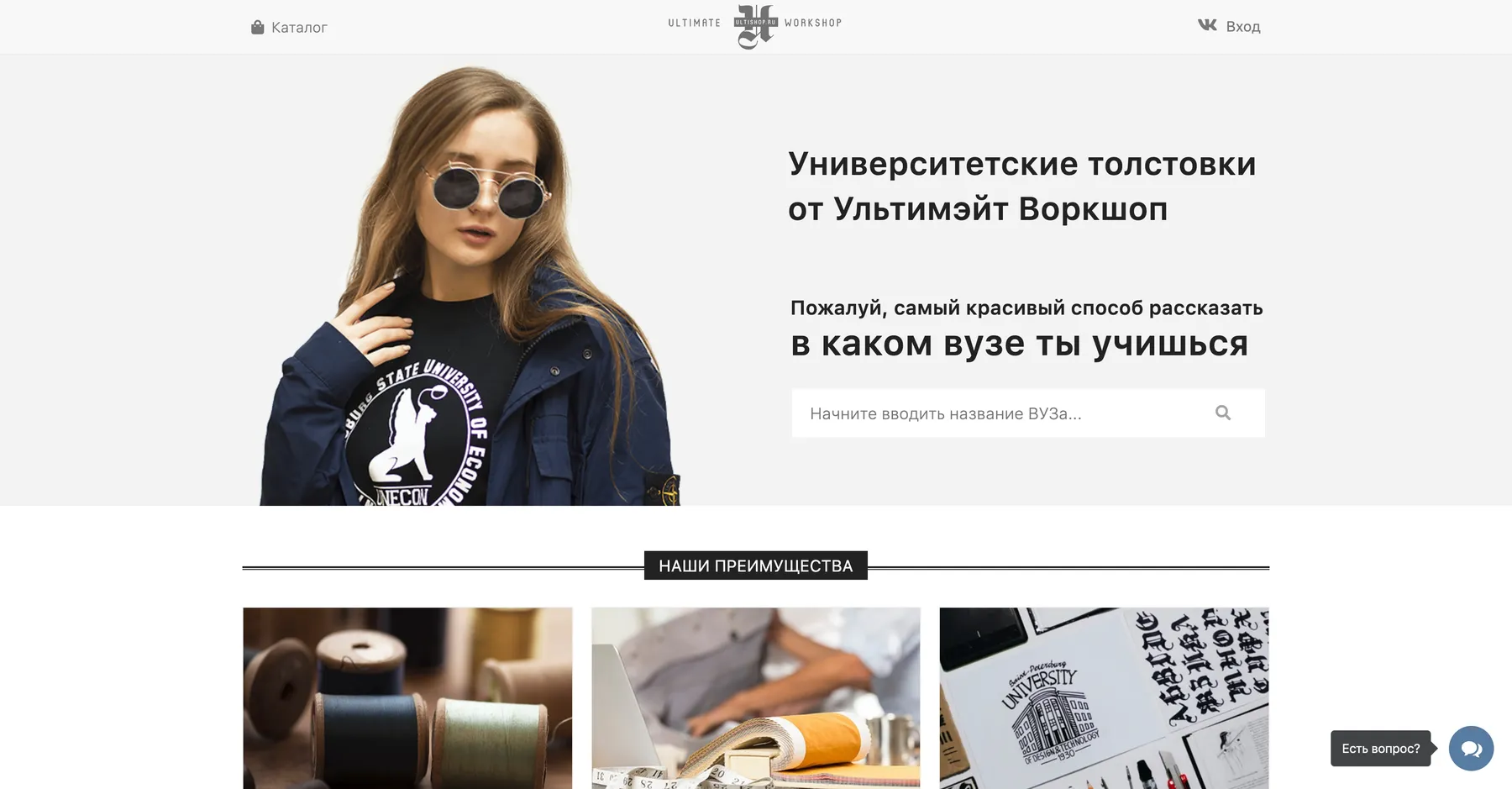
Our homepage at ultishop.ru had a brief info about us, link to catalog, chat with a manager, login and a smart search box. In this box customers could write a full legal name of university (like "Massachusetts Institute of Technology"), abbreviation (like "MIT") or a nickname (like "Mass") with context results. Search box history was logged in our database, so we could easily decide, which university print we should design next.
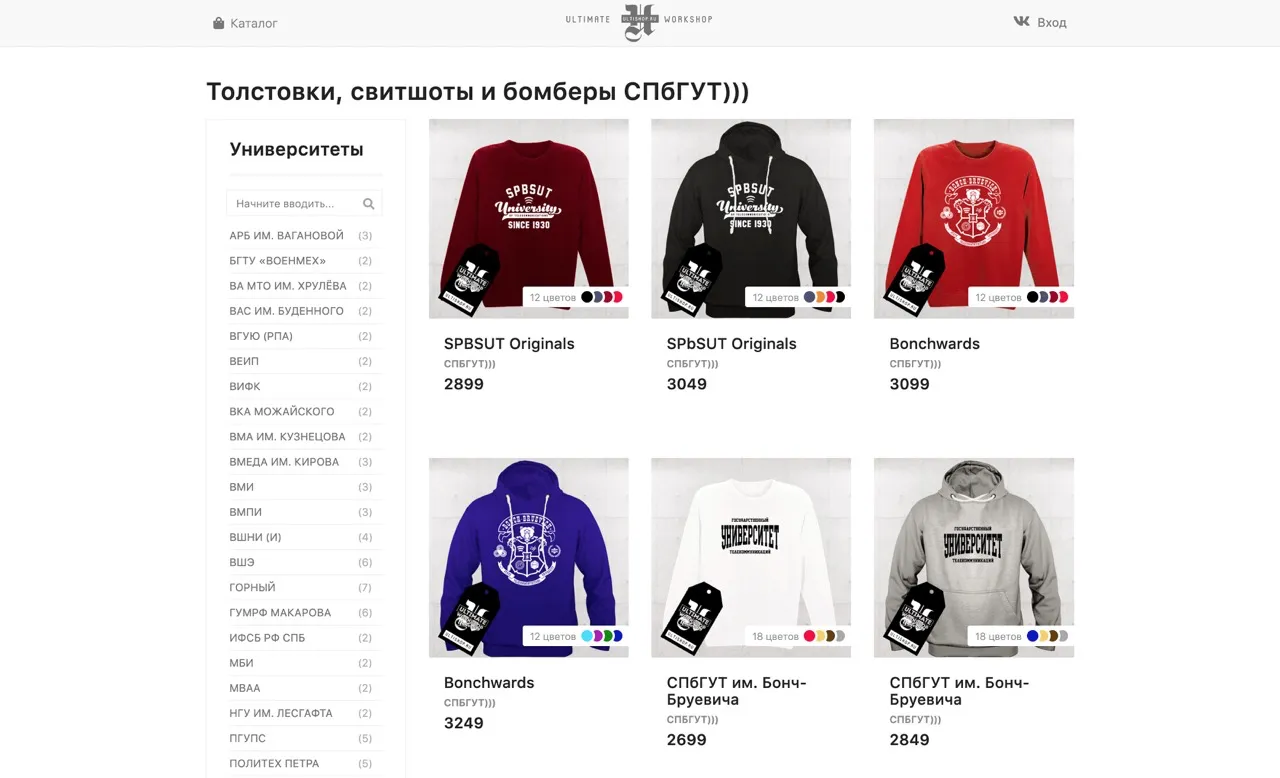
Our catalog featured the same smart search box with a list of all the Saint-Petersburg higher education institutions we had. Customers worried, that we have only colours shown on previews, so we later have done a small UX trick to show slowly changing circles with a number of available colours for each garment.
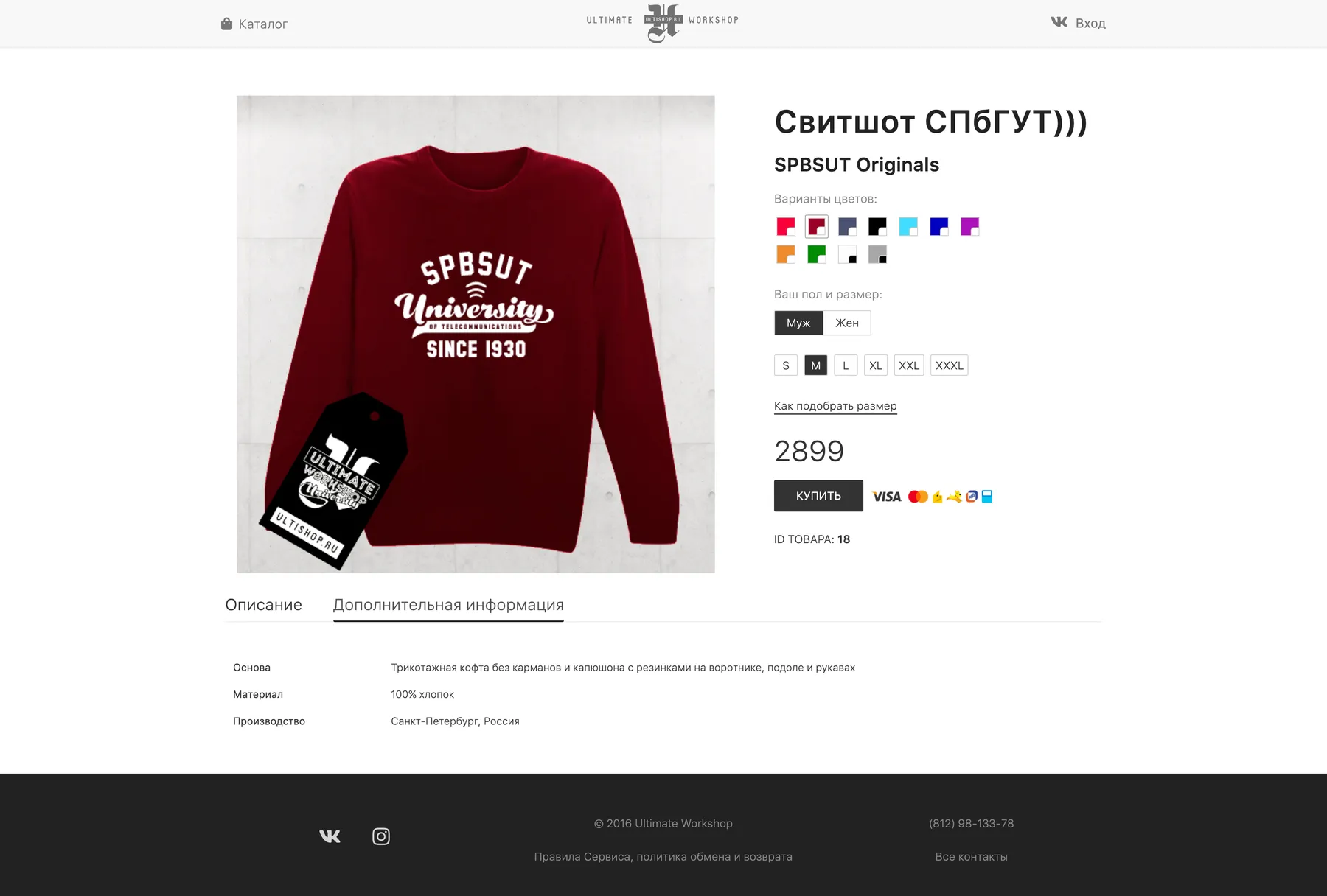
On a product page we have all the info asked by our customers, a selector of available colour combinations, gender and size selectors, purchase button and a link to a guide to measurements for a correct size.
Honourable SEO-Optimisation Technique
Notable part of each page is our own algorithmic SEO optimisation technique, that keeps our shop on top of Google search results and brings us customers even nowadays, when we don't have any active advertisements (Yes, you still can buy a hoodie even nowadays. We have increased price and have no volume discounts from current vendor, but the service is still working perfectly). Each product page has a code to generate a different titles, headlines and descriptions for each garment that have different synonyms, for example, for a word "hoodie": "wimple", "hooded shirt", "sweater" combined with our different names for universities (full legal, an abbreviation and a nickname).
Our own method of bulk garments adding
At first, we didn't have any UI to add new garments. So we did this thru MySQL UI with by cloning existing garments and changing information about them. The trickiest part were images. We had a similar amounts of colour combinations available for each garment type, so I made a special PSD file with a script, allowing us to generate images with a correct name for each print with minimal effort. The only different thing was university abbreviation in a file name.
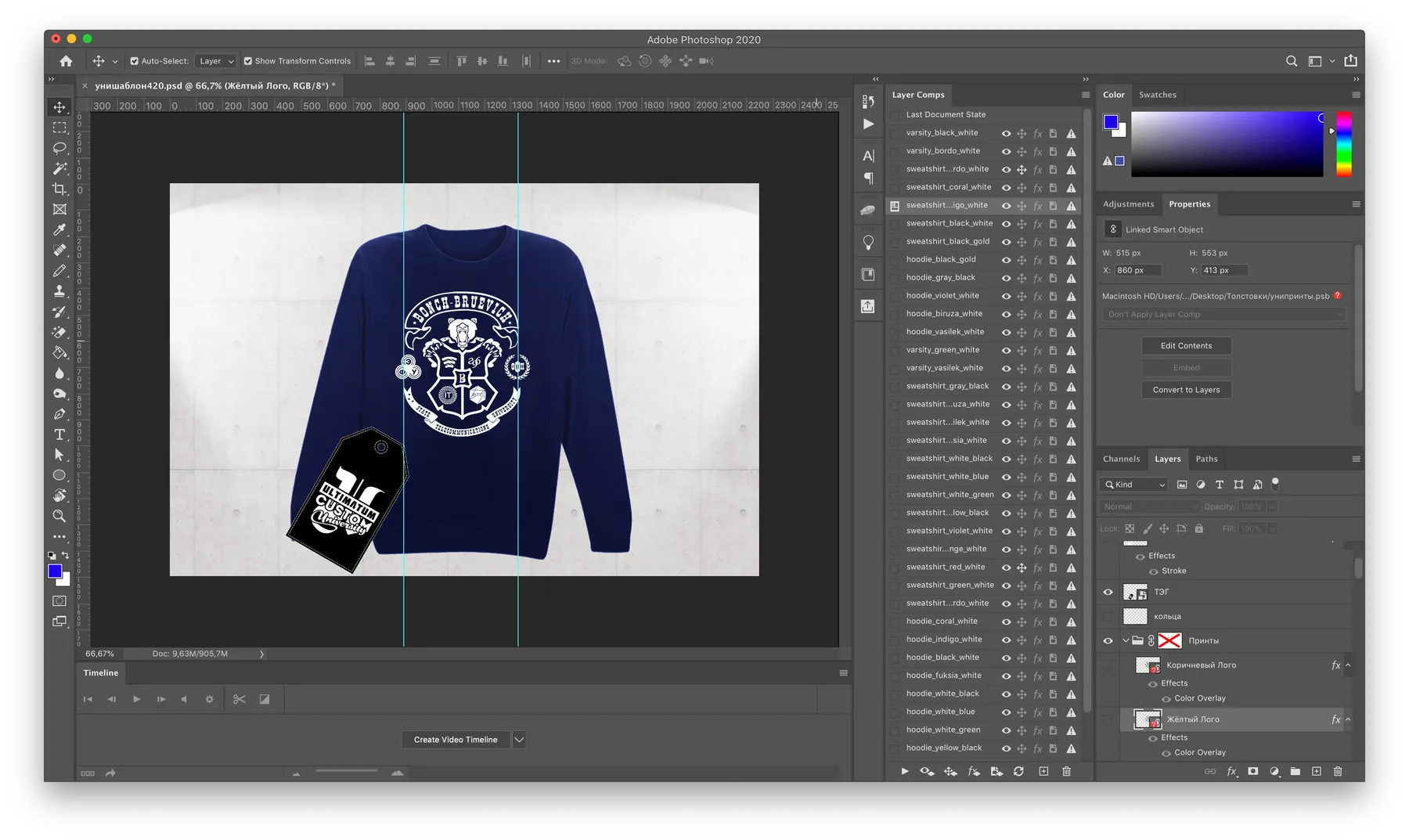
All the images were stored on our server and to fit it in a database, we had a field with a JSON, containing information about colours and corresponding images.
Upgrading of our CRM/ERP
According to our needs, we have implemented more features to Ultimatum TS:
- All the royalties for each sale for all the sales managers, vendors, couriers and agents are calculated inside a system with a possibility to request a payment
- Prices for each type of garment are set globally and could be changed any time
- Every special garment can have custom or additional price (for example, +200 RUB) in exact numbers or percents
- Prime costs for each vendor are set personally and could be changed any time
- E-shop and TS supports coupon codes with discounts in percents or exact value
- Courier's accounts now have a special optimised for mobiles view with a "take all ready to ship" button
- Catalog manager's role, that has no access to orders and financial info, but only access to edit the catalog
- Users management for administrator with an option to register new users from PC or mobile.
- Integration with payment gate and a view of selling stats.
- Generative garment adding
I want to stop on the last one more thoroughly.
Generative garment adding
As soon as we move forward, I found, that we have lots of requests from small universities to make prints for them, but we didn't want to put a lot of designer's effort in that. In our plans we wanted to extend to a whole Russia and go overseas, so we need a mechanism, that would allow us to easily make new garments fast and easy. That's how our "Harvard" collection was born.
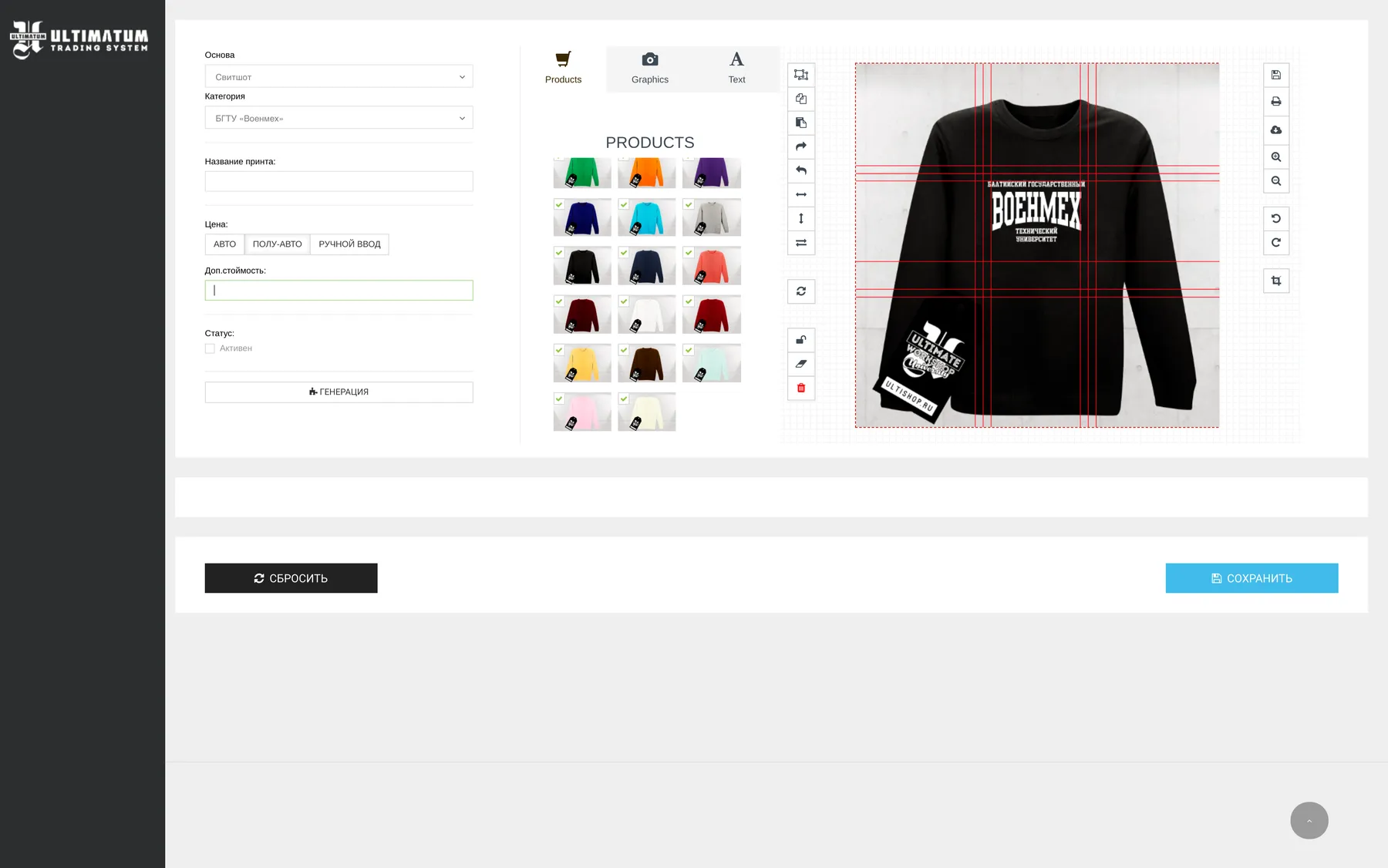
Garments images are generated on server from two layers, arranged in pre-composed combinations. Employee selects garment style and print, and pushes “generate” button. Comparing to “Original” collection, all the prints are generated following the same rule. Vendor’s side have a link with a prepared SVG for printing for each print. This helped us to cover 100% of Saint-Petersburg universities.
Distributed clothing production
Initially, university garments took around 14 days from order to delivery, because we arranged them to batches and sent to our vendors. With implementation of our CRM/ERM we reduced this time to 1 week because it allowed us to send orders to vendors immediately. Mostly in St.Petersburg we were working with one vendor, which was capable to fulfil our needs in sewing and printing most of time excluding peak times. We wanted our garments to have same time to deliver in any part of Russia and, later, the world, so we decided to implement a distributed clothing production. To make it happen, at first we decided to ask a professional fashion designer to develop our own molds and garment design guidelines that could be repeated in any atelier all over the world. Technical processes were optimised to make garments as fast, beautiful and qualitatively as possible.
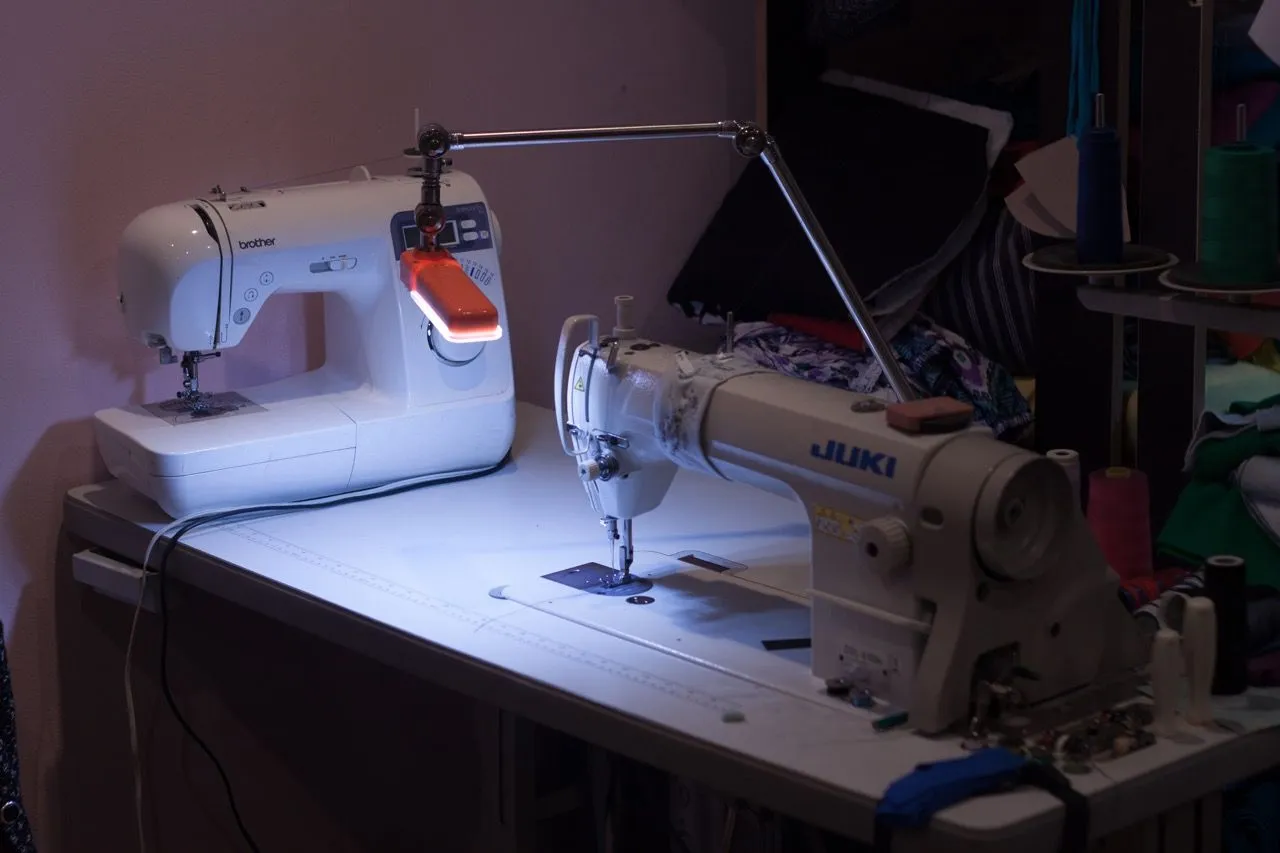
But the problem we met was that small atelier's personnel usually was afraid of IT systems and middle-size ateliers were already looking for orders of at least 30 pieces of one size and style. Vendors were really hard to find and connect. The next problem was that different ateliers requested different prices and minimal volumes while offering different production times. It resulted that even while having contract with some of them, we never offered them any order on their terms, because there was always a candidate with better offer.
Next level: ultm.me - Our own garment customizer
Prerequisites
Closer to 2018 we’ve noticed that lesser and lesser people are wanting to buy university garments. The trend was going to it’s organic death. Also, for political reasons, ruble was devaluated from 35₽/$ to 70₽/$ and we were extremely dependent on that, because there are no good local cotton, printing materials and furniture in Russia, so everything were bought for dollars. Materials cost increased in 2 times, production cost Increased in 1.5 times, but optimal market price moved from 1900₽ only to 2300₽ per sweatshirt. Also, losses for human factor errors have grown: then each good quality garment covered 1 possibly bad garment, now to cover 1 bad garment, we need to produce and successfully sell 3 garments. There is a type of human mistakes, when a wrong size of a high quality clothes was produced. Lesser combinations of colours and prints we have - more probability to sell that wrong size piece.
All of these pushed us towards a new market - customisable clothes for everyone. While we did university garments, our audience was limited by university students and graduates. We wanted our technology to be used by wider audiences.
Market research
I was constantly monitoring Russian streetwear market and noticed a visible trend that founder of one Russian fashion public page at vk.com called "wordwear": basic tees or sweatshirts with one or two lines of Cyrillic text, with meanings, usually associated with youth and childhood romantics. Some are using simple sans-serif fonts and some are influenced by brands like Thrasher or Supreme.
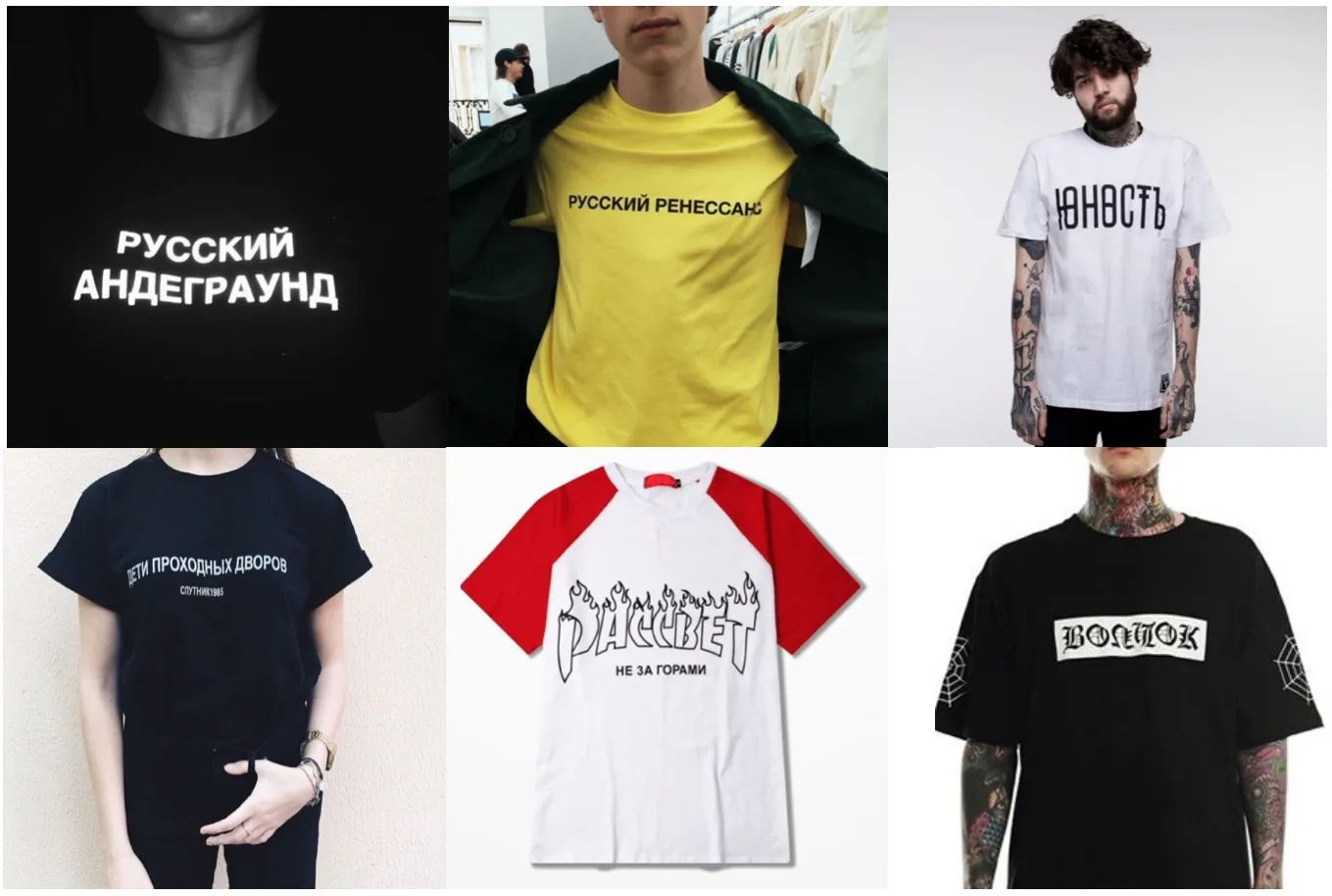
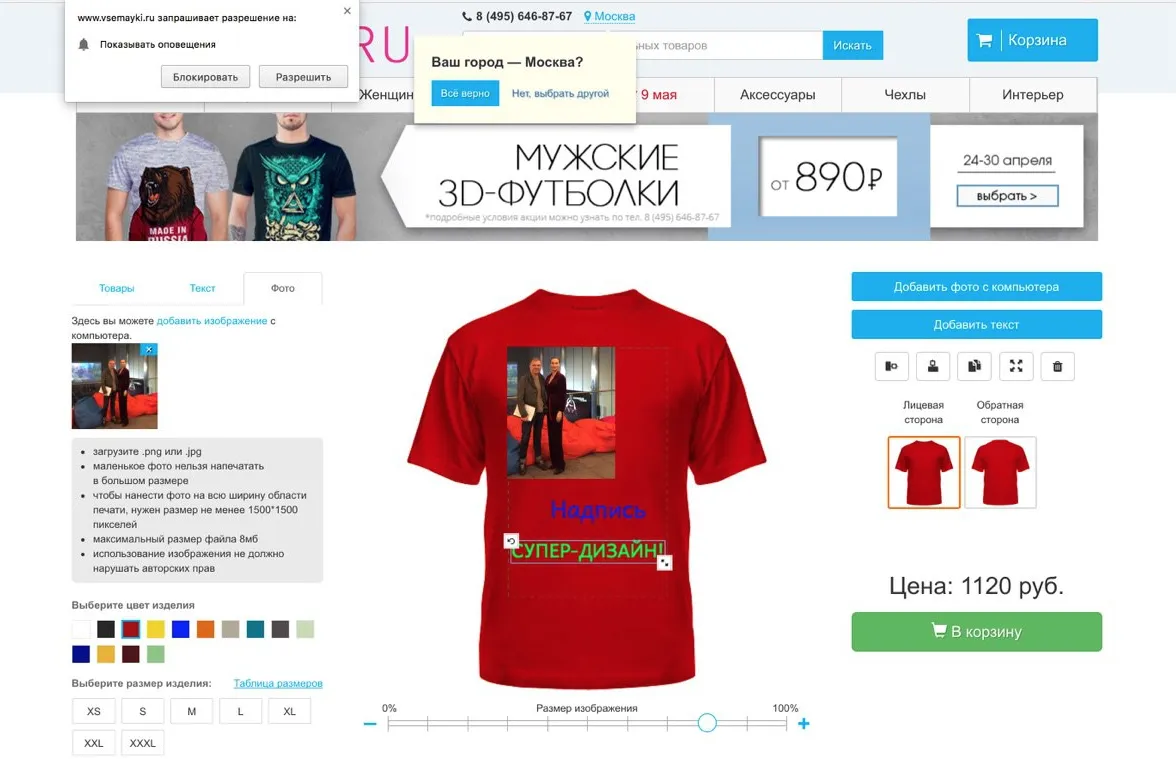
The main thing that is noticeable is that they are simple and are looking good from the points from colours, composition and typography. We started to dig about a ways to make your own t-shirt in Runet, but found only a few main vendors, that offer a customisation interface for customers and mostly the resulting things were looking critically ugly. Reputation of this type of services was bad because of low quality of printing and garments itself, lots of copyright violations, objectively bad taste of catalogue moderators. We decided to solve this problem and come up with a solution that wouldn't let our customers to make something ugly.
Our solution
Most customising services were allowing users too much freedom: not everyone are good enough in looking for colour combinations, composition and typography to make a strong result, so we decided to make a tool, that would allow our customers to be creative, but allowing achieving results, that would be aesthetically pleasant with high probability. We analysed current trends and defined a few styles that we want our editor would initially have. Mikhail developed a set of functions for JS and SVG that operated with actual and relative positions of text and curves, borders, fake shadows, rotations, text on contour, etc., that could be used with our presets, that were actually JSON configs, containing parameters to these functions. To make every text look good, he made an auto-scaling mechanism that didn't allowed text to go beyond limits of printable area, decreasing font size automatically.
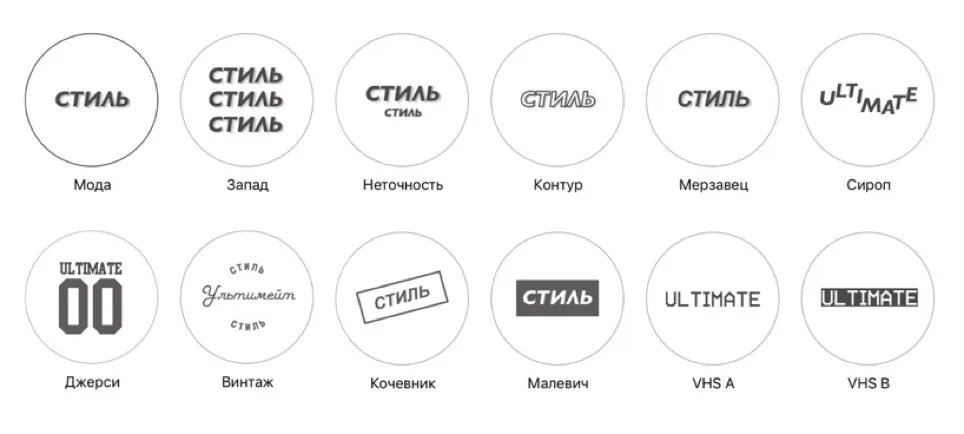
Prints
Most of our initial styles were based on a "Textura" trend in vk.com and Russian tumblr internet postcards, that was popular that days. Almost every second Russian girl had at least one of these on her "Wall" or "Saved photos" on her vk.com page. Mostly, they were using sweet coloured italic Gill Sans font with border or fake shadows on a gradient or sunset photo background with romantic youth quote or a part of a cloud-rap song lyrics. We planned a function to generate this type of pictures within our editor with an ability to instantly order a tee with a text from it.


To make prints unique, I've designed a few new Cyrillic fonts, based on VHS camcorder's font, glitched version of Futura and notable "Samurai" font, based on real Japanese symbols.
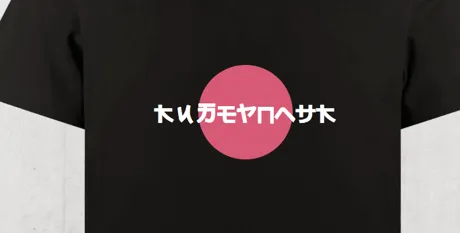
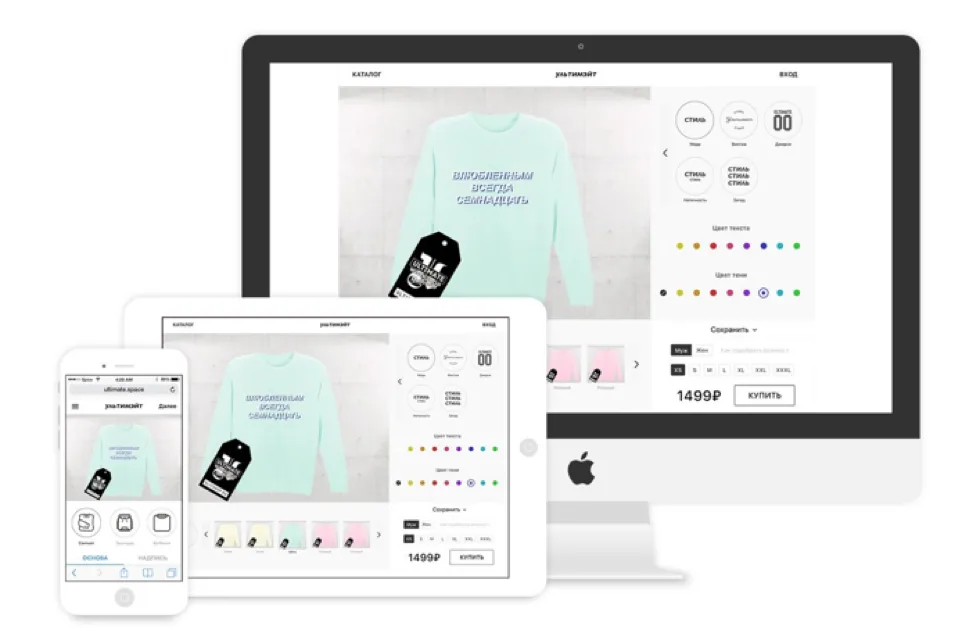
UI/UX Design
Our interface was designed to remind experience of Instagram and vk.com as two resources most popular around younger generations to make it easier to get used to it. Garments and prints selection design were based on Instagram's filters selection, and colour selection on it's photo editing tools.
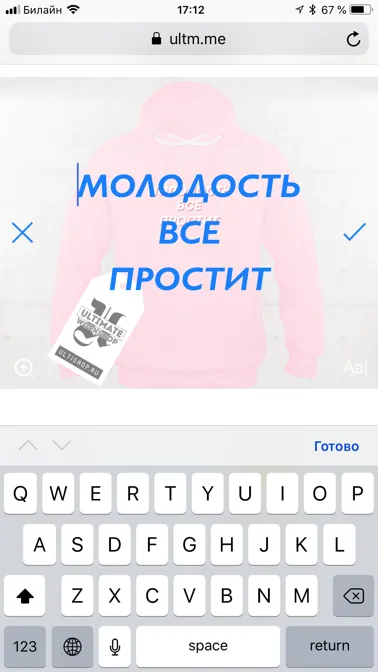
Text editing was based on early Instagram stories editor. You could touch text area on a print to expand it to full screen, allowing to edit text without any effects and move cursor more precisely.
Ugly clothes are prohibited. But how?
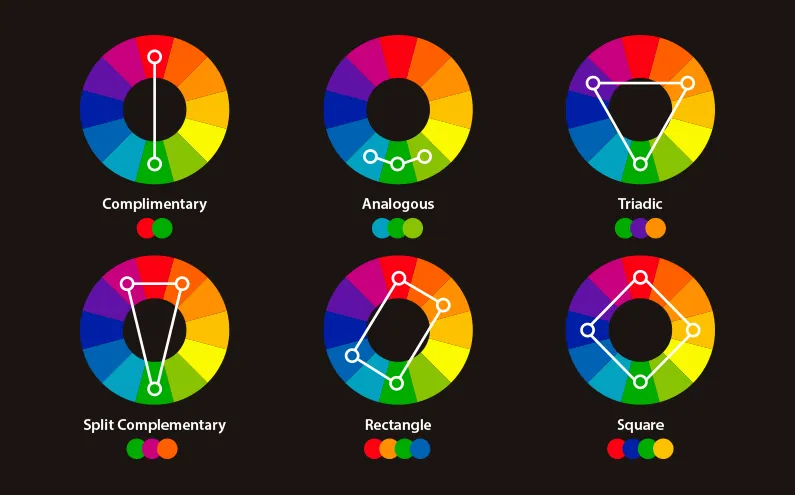
We had around 15 different colours of fabric and 24 colours of prints. We wanted our users to use them wisely and be sure that every combination that user could make would be aesthetically pleasant and contrast enough to be easily readable. To make it possible, we used a combination of two technologies: Johannes Itten's color colour ring and WCAG contrast check.
The first one was used to find 2 or 3 harmonic colours that could be used for garment itself and as a foreground and background colour of a print.
Second one checked is our text actually readable on particular background on Web Content Accessibility Guideline (WCAG) colour contrast scale. We allowed only AA and AAA compliant colours.
So for each of 15 fabric colours, we have only 2 to ~10 print colours accessible to user, in which we are 95% sure that resulting print would be aesthetically pleasant and easily readable.
Onboarding, sharing and loyalty program
We wanted to make on-boarding experience as easy as easy as possible, so editing functions were available as soon as app was loaded. We asked potential users about their their relations with e-mails and a lot of them (especially, 18 y.o. girls) didn't know how to use them and decided to implement a login using vk.com as a main social network in country. Logging in allows to check order statuses and gives access to loyalty program screen.
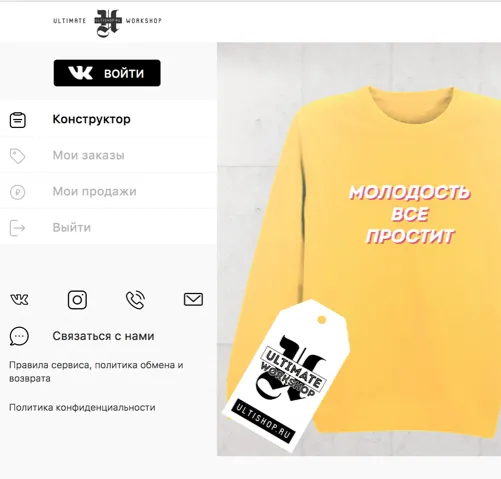
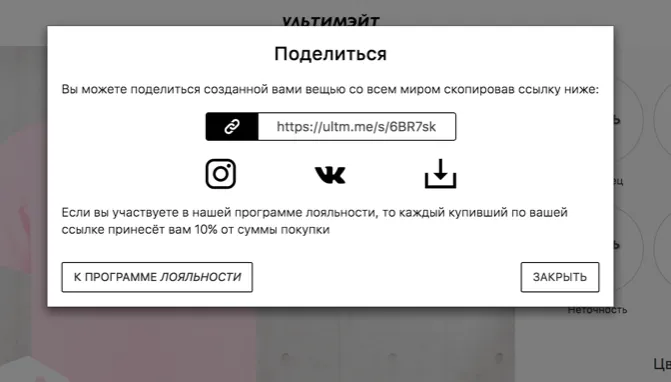
Every design state could be saved and shared to be modified and bought by any person by getting a special link, containing information about current editor state. We added option to automatically post a link with preview to social networks or save a resulting picture on disk.
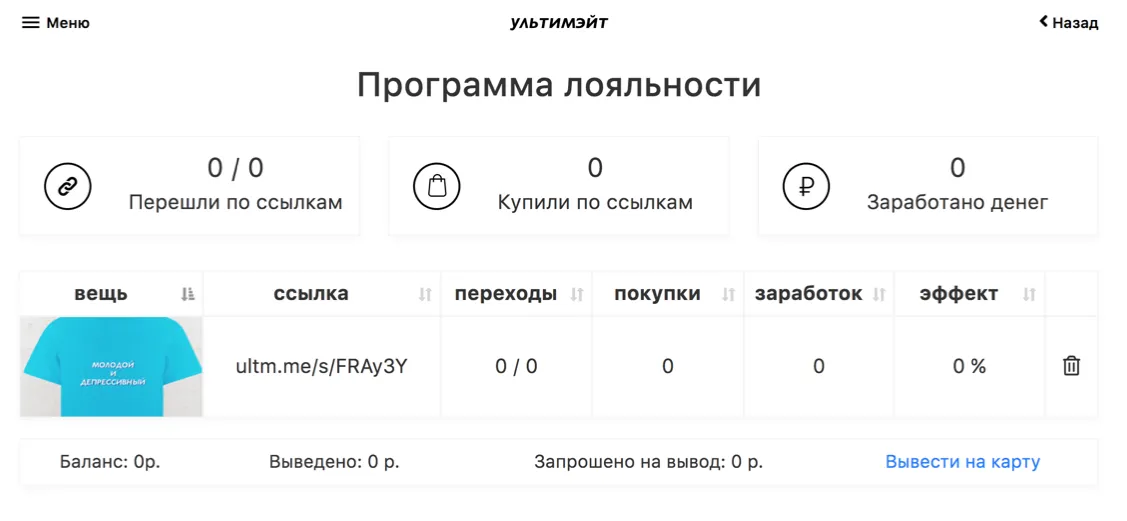
Any person, filled personal info could request access to out loyalty program, allowing users to get 10% of price of each garment sold following their link, even if final user would modify it. We made a usable UI to check, share and delete active links, monitor their conversions and withdraw royalties to bank card.
Garment production side
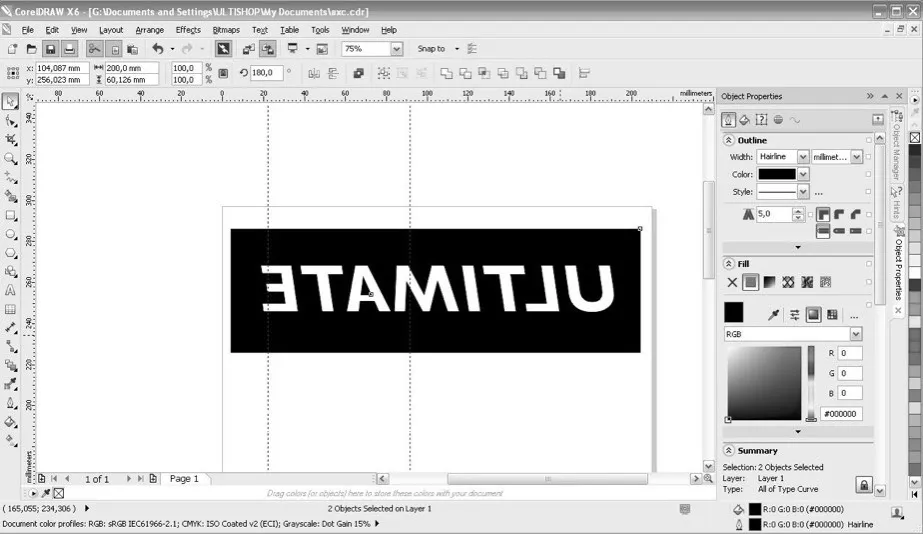
When someone ordered an item of particular size, our system automatically generates ready for printing mirrored SVG file with correct dimensions, allowing our employees to start printing in just 2 clicks without any work on file itself, reducing a chance to make a mistake and spoil a garment.
Usability and user testing
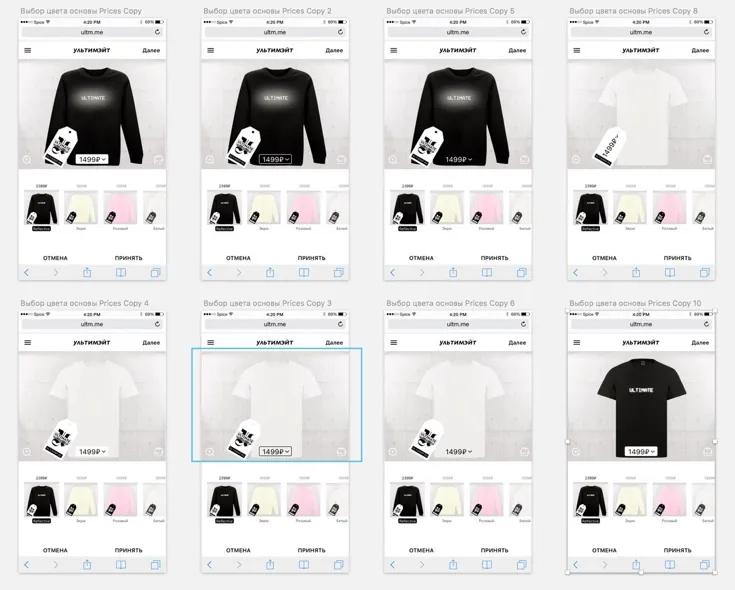
To make decisions, we had a chat with 15 project friends of different ages and specialities. Sometimes I just passed them a few versions of the same screen, asking for their opinions which one they think is the best.
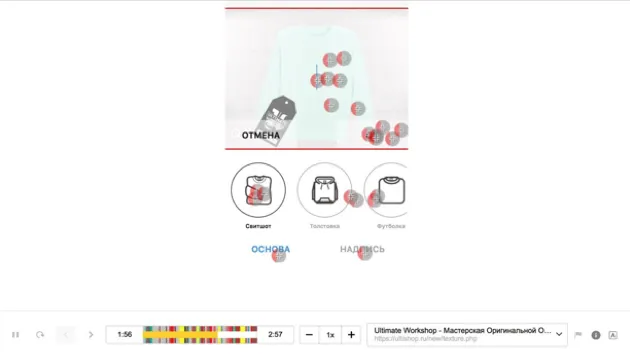
But anyway, of course we did usability testing with fresh people didn't know anything about the project. We made a passwordless authorisation to identify them and used Skype and Yandex.Metrica's Webvisor to ask what do they think and feel, while using interface and record their actions on screen.
Final
Unfortunately, we had a giant technical debt and a lot of things didn't worked good as expected didn't allowing users to finish an order. If I could travel in time, I would tell myself these days about LEAN startup principles, ICE score and HADI cycles, but I didn't know anything about it. Every mandatory feature had too much bugs and the code itself used too much ghetto-hacks inside. Some print design features on different screens, browsers, devices and on print worked differently and we went too far in unexplored part of SVG: some features were implemented differently in different web-browsers, because they were almost beyond W3C standards. All these things resulted in whole days of refactoring without a noticeable result and Mikhail was getting more and more frustrated and started to lose interest in project. We were in checkmate situation, where we didn't wanted to sell university hoodies anymore, because the demand for them went critically low during the same time of a year as peak times of former years and have nothing to offer instead of them because our new project is stuck in slack-baked condition. We didn't fulfilled our main purpose, almost ran out of funds and decided to sell a project, gained a lot of experience and went to a full-time jobs.
Results
- Really big amount of experience for 2 freshmen in IT (just take a look at the article)
- More then 10000 orders successfully finished
- Dozen of university home tasks and projects covered with parts of this project
- Awarded with Scholarship of the President of the Russian Federation for undergraduate students studying in specialties corresponding to the priority areas of modernization and technological development of the Russian economy
- Two "Excellent" grades for bachelor theses: for CRM/ERP System and Online Customizer for Mikhail and me
- Sale of resulting product