Proptech · 2020–2021
Product design at UGOL: Revolutionising renovation
AI-generated design projects for $50 instead of $2,000, and a renovation you can run from your phone.
- Measured3–5 → 150+design-project orders a month after launch
- Measured×5.5funnel conversion; new flow and the $50 price were one decision, so pricing shares the credit
- QualitativeRBC, KP, Fontanka, Lifehacker, CIANmedia coverage
- Role
- Senior Product Designer & Assistant Product Manager
- Company
- UGOL Smart Renovation, St. Petersburg and Moscow
- Timeline
- Jan 2020 – May 2021
- Team
- Scrum team of three developers; CEO, CPO, Head of Renovation, marketing, account manager
- Platform
- Web app, client cabinet, internal AI-powered CAD
- Methods & tools
- Figma, Yandex.Metrika and Webvisor, RICE prioritisation, A/B tests, CustDev interviews, surveys, SWOT
Outcome
- Measured3–5 → 150+ design-project orders a month after launch
- Measured×5.5 funnel conversion; new flow and the $50 price were one decision, so pricing shares the credit
- QualitativeRBC, KP, Fontanka, Lifehacker, CIAN media coverage
Measured outcome in productionQualitative context: process, volume, lab or qualitativeUnder NDA under NDA
60-second brief
The problem
Turnkey renovation is a once-in-a-decade purchase that people distrust: a design project costs about $2,000, estimates are typed by engineers by hand, and contractors' prices and quality are opaque. UGOL had just pivoted from a 3D editor to an AI-driven design service and needed a funnel that turns a nervous first-time customer into a paid project, then into a renovation order.
What I did
- Ran quizzes, surveys and CustDev interviews with people mid-renovation, plus SWOT, competitor and market research to pick the segments worth serving: existing flats in St. Petersburg first, Moscow next.
- Turned the account manager into a research channel: every call fed a list of steps that could move from phone and office into the product.
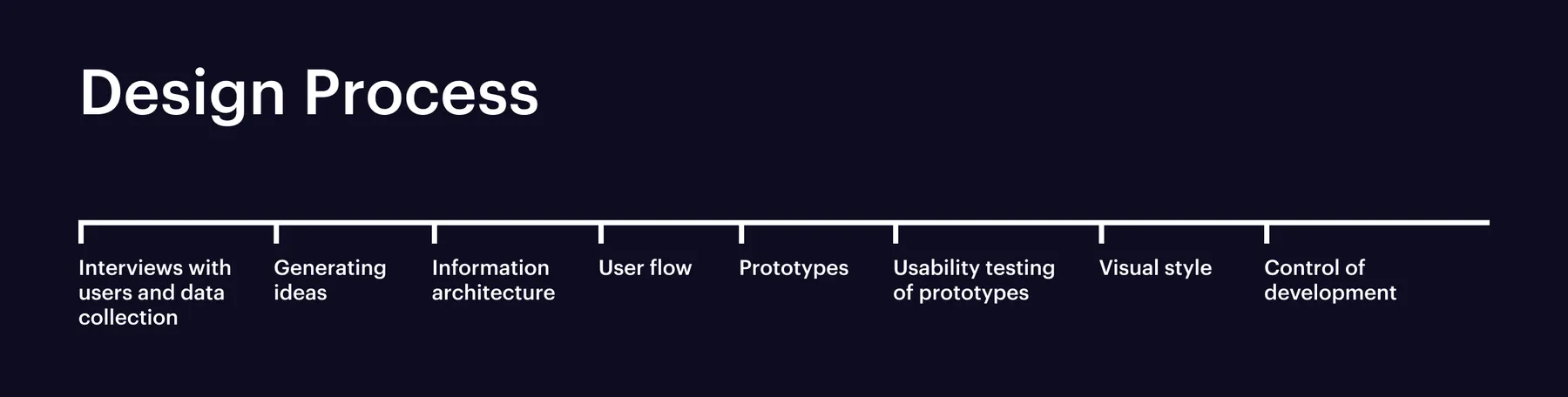
- Prioritised with RICE, drew IA and user flows, tested static and dynamic prototypes with customers and staff, audited every release for design compliance.
- Instrumented the funnel with Yandex.Metrika: conversions, session replays, click heat maps per traffic source; ran A/B tests on updates.
Decisions that mattered
- Interactive briefing instead of a designer meeting.
Style, rooms, lifestyle and an uploaded floor plan produce an AI-generated 3D preview with a shopping list and real local prices.
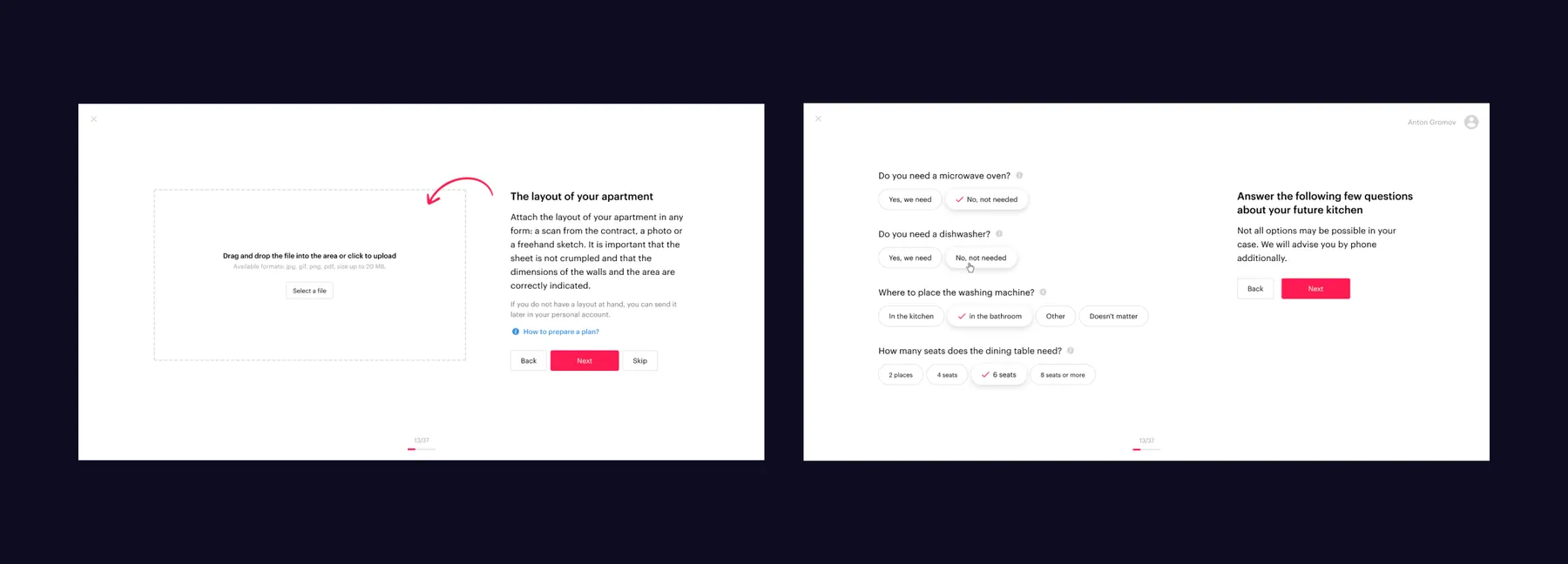
The interactive briefing that replaced the first designer meeting - Three free iterations with a real designer, extra ones paid.
Keeps the $50 price point while covering the cases the model gets wrong.
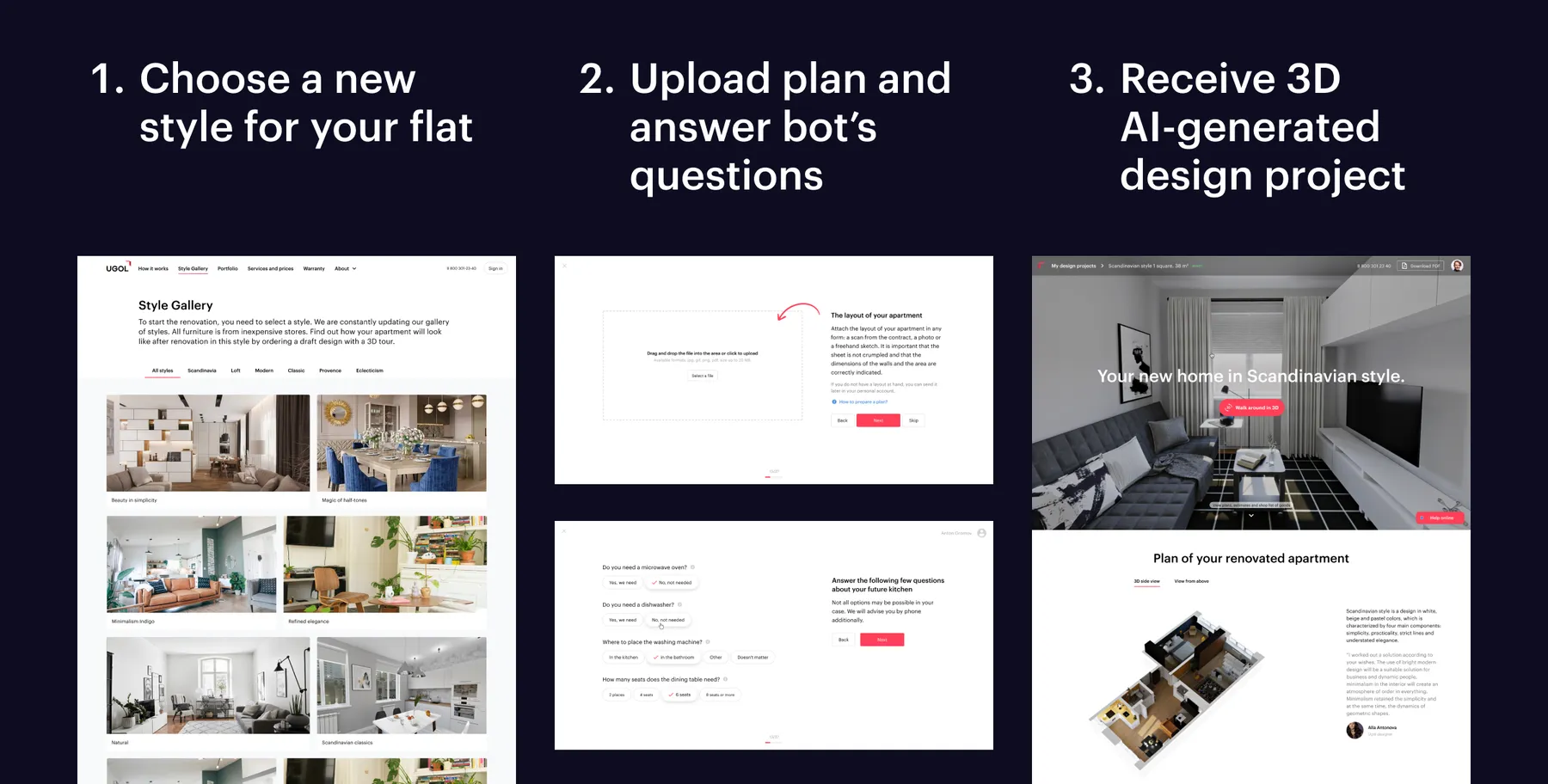
UGOL.Configurator: pick a style, upload the plan, receive an AI-generated project - Trust moved into the interface.
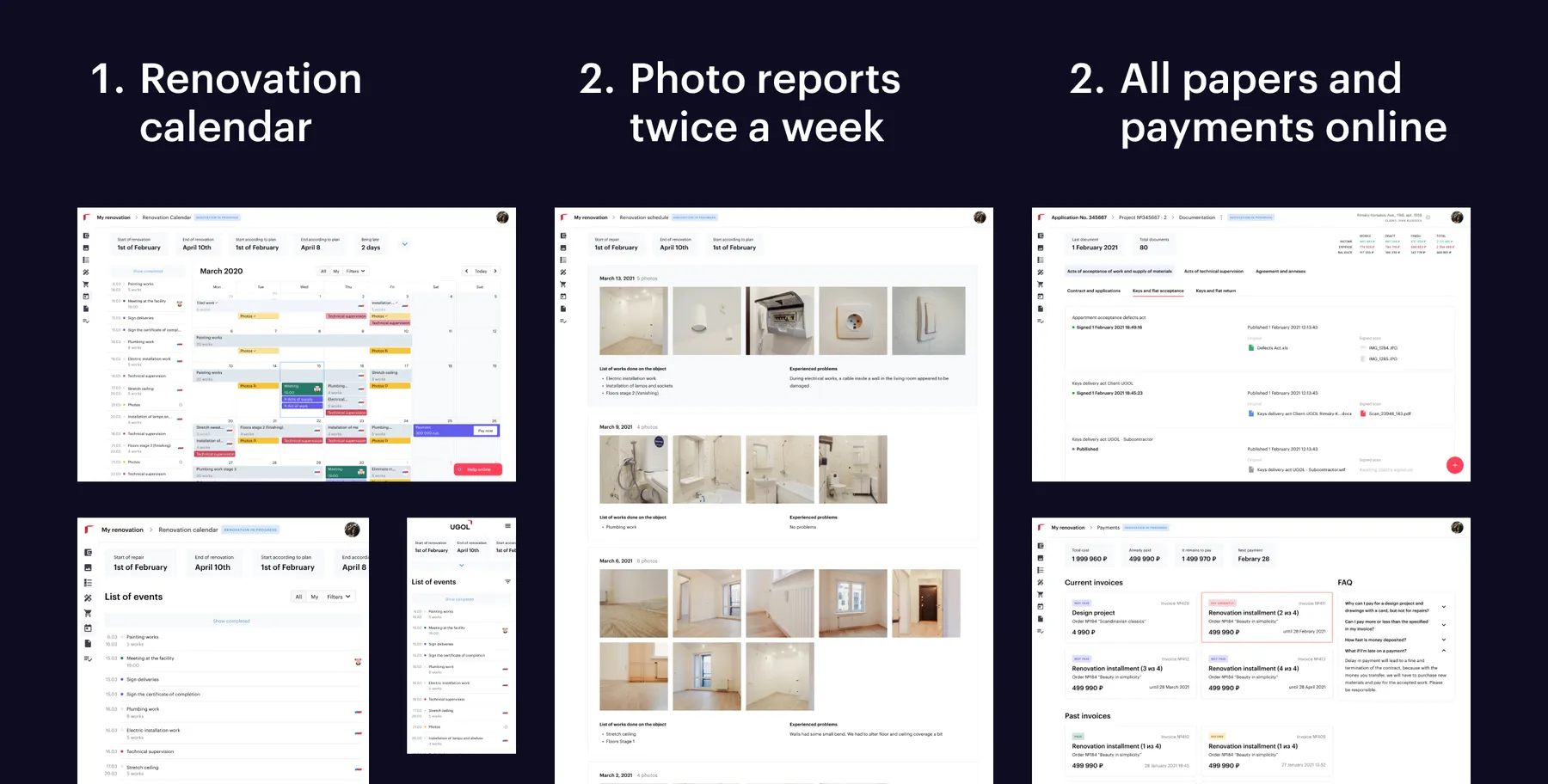
A renovation calendar with photo reports, twice-weekly supervision visits, payments and signatures in one timeline, so customers stop calling to ask what is going on.
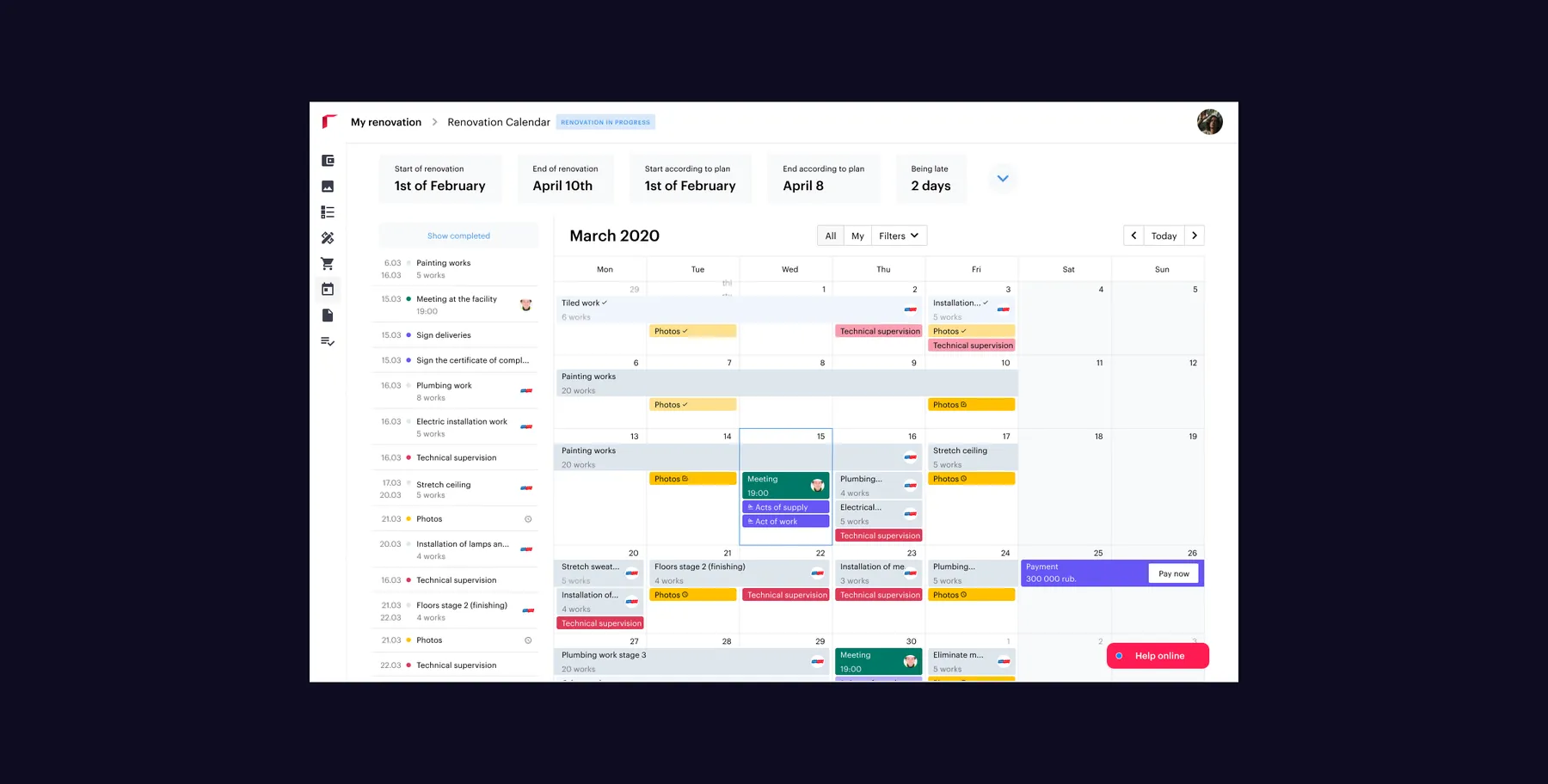
Renovation calendar with stages, delays and supervision visits
Working with engineering and product
- Most blueprints are generated from the 3D preview; designers add only lighting, electrics and plumbing.
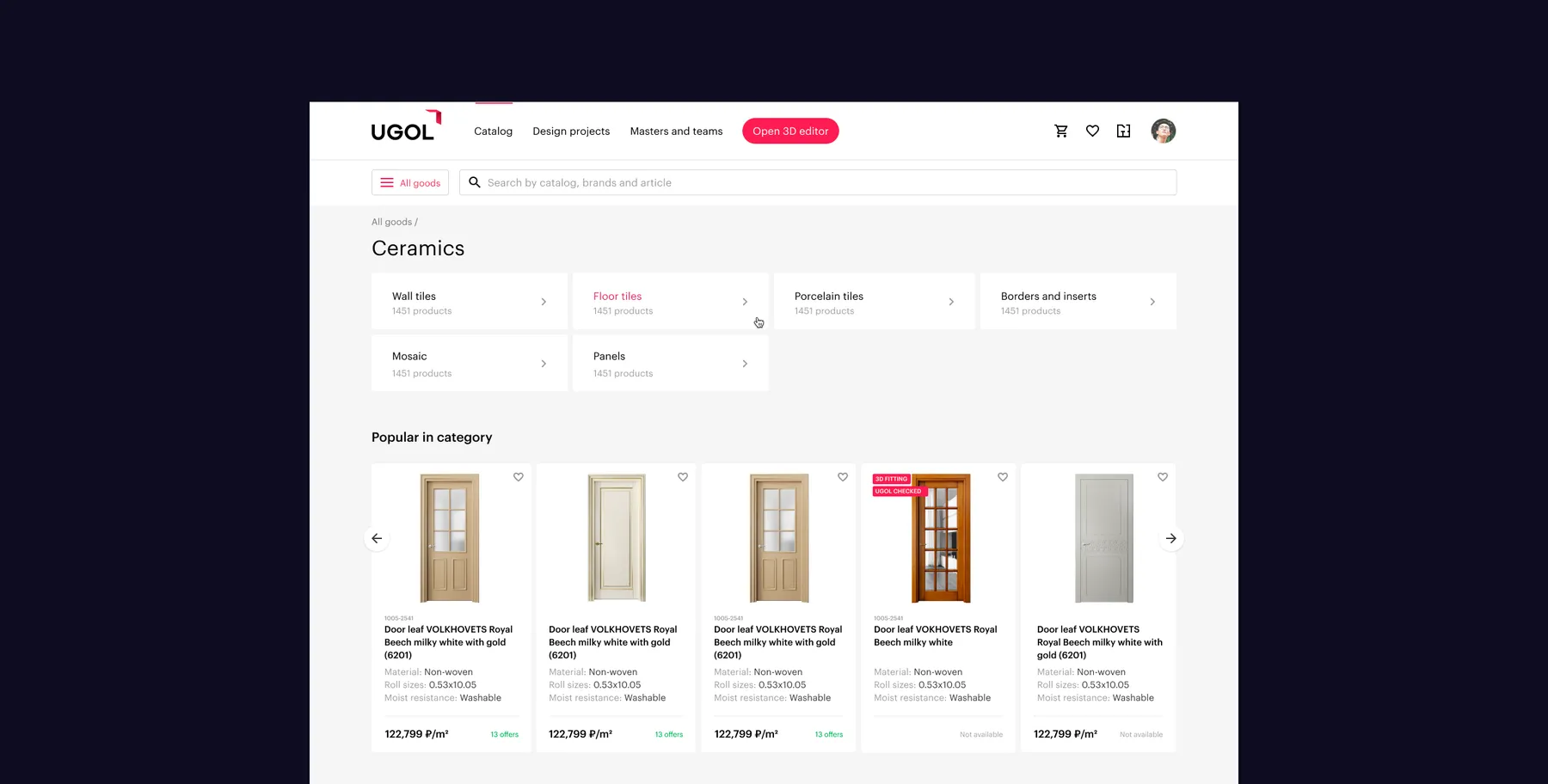
- A supplier aggregator pulls prices in real time; documents are signed electronically; payments by card and QR bank transfer, no office visit needed.
- Small dev team and renovation crew, so features shipped in slices and were checked in production through Webvisor before the next slice.
Impact
- Measured3–5 → 150+ design-project orders a month after launch
- Measured×5.5 funnel conversion; new flow and the $50 price were one decision, so pricing shares the credit
- QualitativeRBC, KP, Fontanka, Lifehacker, CIAN media coverage
Enough renovation orders to keep every crew in St. Petersburg busy, a self-sufficient unit economy, expansion to Moscow, coverage in RBC, Komsomolskaya Pravda, Fontanka, Lifehacker and CIAN.
What I took awayOnly 2% of customers ever come back, so the first session has to earn all the trust; acquisition and clarity beat retention mechanics here.