Edtech · UX research · 2019–2020
Semantical Math Editor for Wikipedia: Deep UX tribute to OpenSource
Master's research: eye-tracked lab tests and six TypeScript prototypes to find the fastest way to type maths with full semantic markup.
- Lab study×2.6faster task completion with tabbed categories, in a lab study
- Lab study+10%speed with icon categories instead of names, in a lab study
- QualitativeBest Science PaperXV Congress of Young Scientists, 2019
- Role
- UX researcher and designer, Master's thesis
- Company
- ITMO University; experiments at Tomas Bata University, Zlín
- Timeline
- 2019–2020
- Team
- Solo, with the ITMO Usability Lab and student respondents in two countries
- Platform
- Web
- Methods & tools
- Eye-tracking, A/B usability tests, Wilcoxon T-test, TypeScript prototypes, symbol-frequency analysis of arXiv and school textbooks
Outcome
- Lab study×2.6 faster task completion with tabbed categories, in a lab study
- Lab study+10% speed with icon categories instead of names, in a lab study
- QualitativeBest Science Paper XV Congress of Young Scientists, 2019
Measured outcome in productionQualitative context: process, volume, lab or qualitativeUnder NDA under NDA
60-second brief
The problem
Next-generation maths tools, such as automatic checking of handwritten homework, interactive formulas and searching the web for an equation, need full semantic markup, and no editor lets a non-programmer produce it. Wikipedia's 2020 component was the only implementation and needed page hops for every symbol.
What I did
- Pilot in ITMO University's usability lab: ten respondents with eye-trackers typed the same expression in four online editors; results produced four testable hypotheses.
- Built six TypeScript prototypes that differ pairwise in one variable; at least ten respondents per pair at Tomas Bata University in Zlín; order randomised, significance checked with Wilcoxon's T-test.
- Analysed how often symbols appear on arXiv and in what order nine school textbooks introduce them, then arranged the symbols into seven categories.
Decisions that mattered
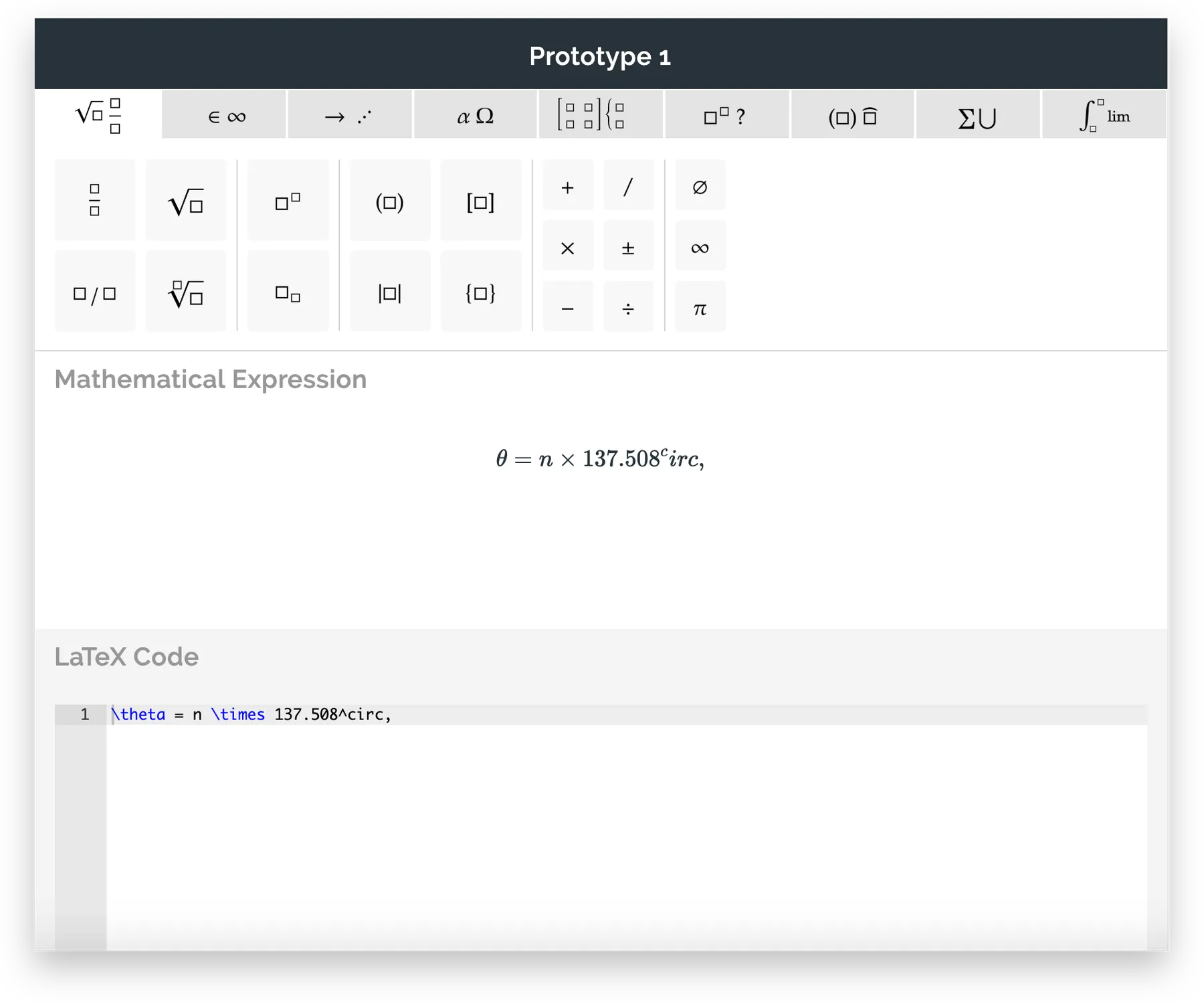
- Tabs, not a scrolling grouped list.
Task completion 2.6 times faster.
Tabs ordered by frequency of use and school study order - Icons instead of category names.
Ten percent faster; a quarter of respondents did not notice the change but still got quicker.
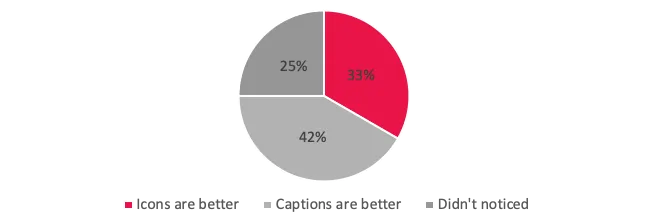
Experiment 2: icons instead of category names - Small categories only.
With broad ones half the respondents gave up and asked to stop.
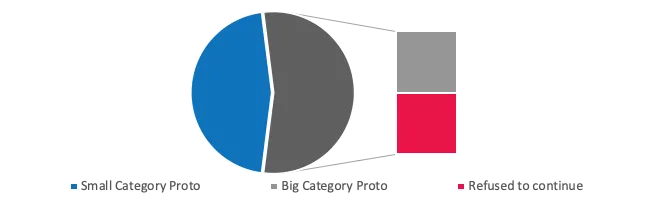
Experiment 4: too broad categories, respondents gave up - Type first, then mark meaning.
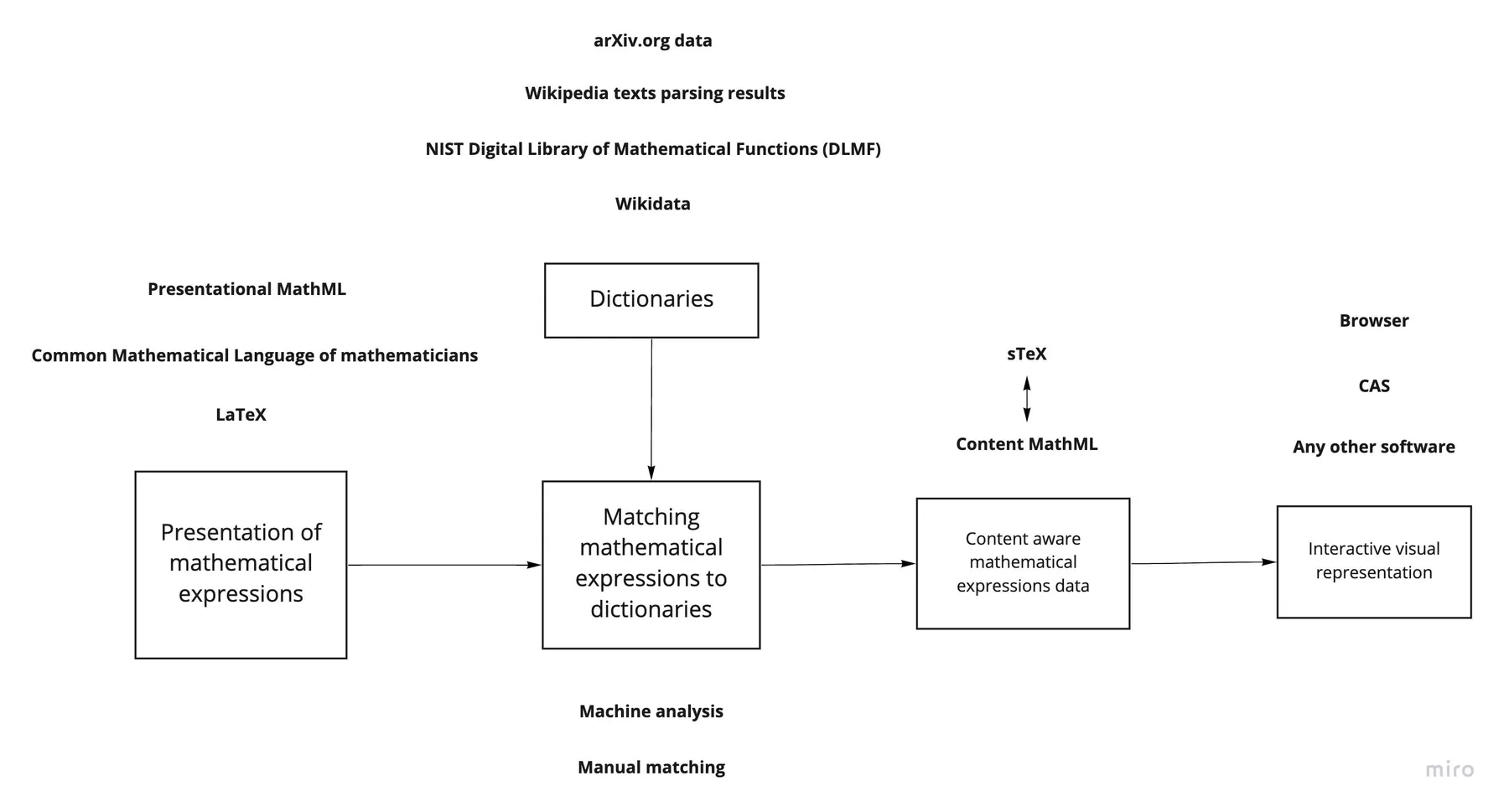
Write the expression in presentation mode, then link each symbol to its meaning; the tool suggests the likely one. Backslash opens insert-by-name, autocorrect handles ellipses.
Main scenario: write, then link each symbol to its meaning
Working with engineering and product
- The markup principle follows the Gold Standard adopted with W3C and Wikipedia developers: Wikidata, DLMF and arXiv as references, so the interface fits an existing open standard.
- Wikipedia's working group expressed interest; the thesis was translated into English for them.
Impact
- Lab study×2.6 faster task completion with tabbed categories, in a lab study
- Lab study+10% speed with icon categories instead of names, in a lab study
- QualitativeBest Science Paper XV Congress of Young Scientists, 2019
Best Science Paper at the XV Congress of Young Scientists in 2019, a journal article in 2020, a Master's thesis with recommendations for the editor's layout.
What I took awayUsers do not read category names; they look at contents. Measure behaviour, not stated preference.