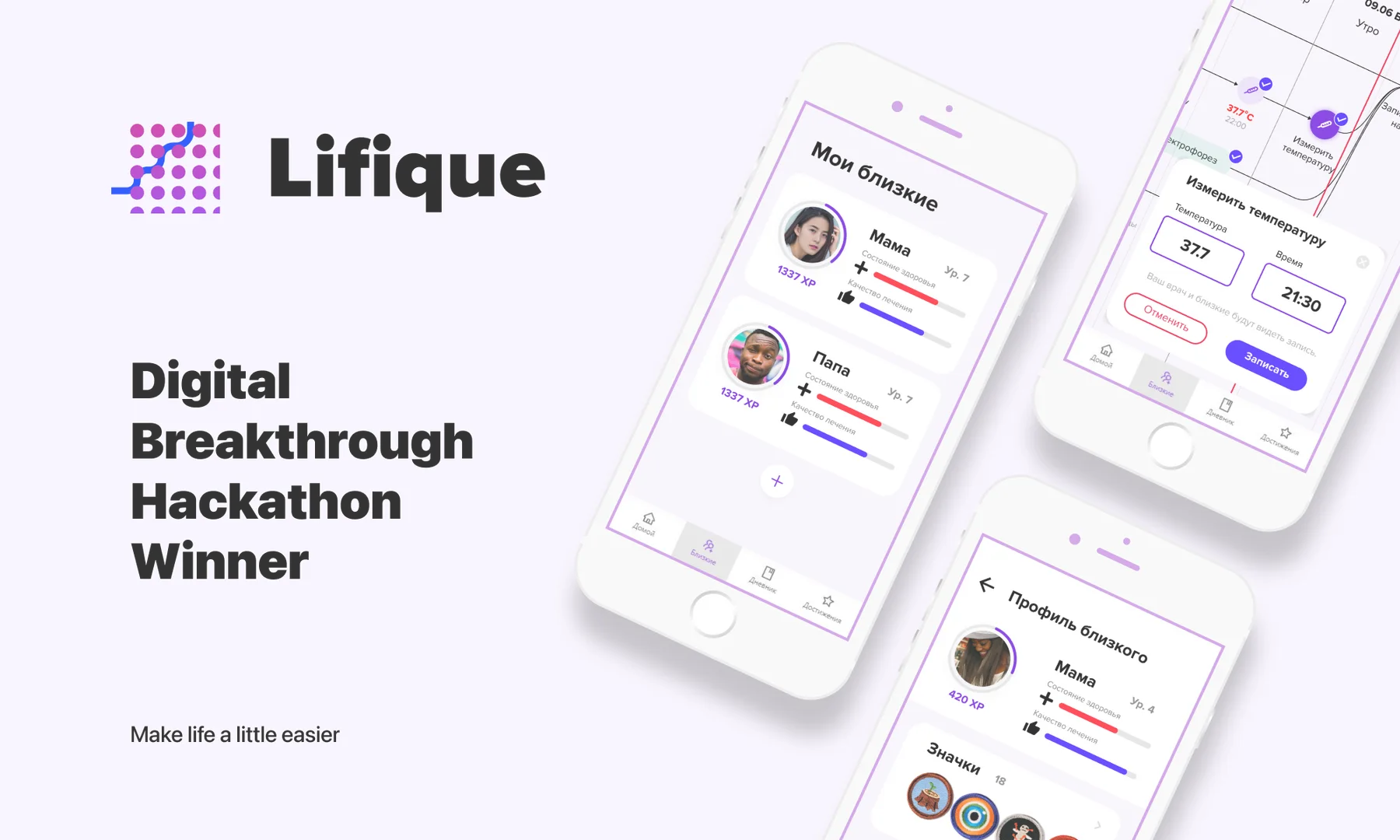
An application for gamifying the execution of doctors' prescriptions. With this project, we won the St. Petersburg "Digital Breakthrough" - a 36-hour hackathon held by the government organization "RUSSIA - COUNTRY OF OPPORTUNITIES" (upd.: Sounds specific in 2023), the Foundation for Assistance to Innovations, Rosatom, Mail.Ru Group, Megafon, and MTS, under the "Healthcare" track.
Problem
One of the most common reasons for complications of diseases even after visiting a doctor is the refusal of patients to follow prescribed rules: diet, medication regimen, restriction of physical activity.
Smartphones with corresponding software have significant potential for stimulating patients to comply with prescribed rules.
(Organizers' formulation of the hackathon)
Task
It is necessary to develop a mobile application that will make the user comply with the rules entered by the user himself in advance.
The application can remind the user of the time to take medication (notifications, alarm clock), can send messages to his relatives / other contacts.
(Organizers' formulation of the hackathon)
Team
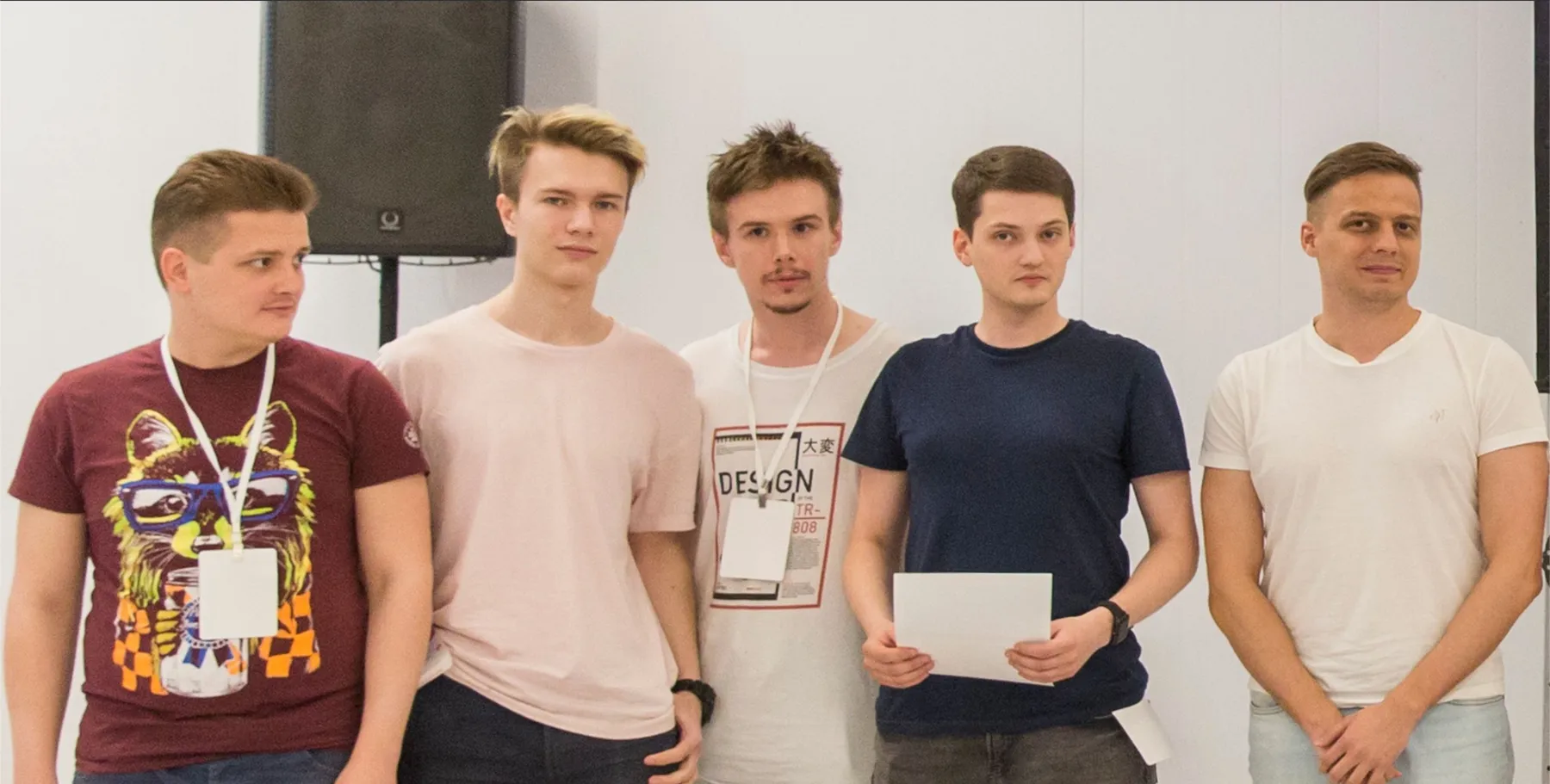
Danila - Product Designer, Researcher
Dmitry - Product Manager, Pitcher
Michael - Frontend Developer
Vlad - Backend Developer
Andrey - Backend Developer
My Role
I assembled the team, conducted in-depth interviews with doctors, surveys of the target audience, studied existing solutions, proposed solutions that were accepted by the team, thought out the visual style, drew the interface and animated it, helped with the presentation and pitch text.
Result
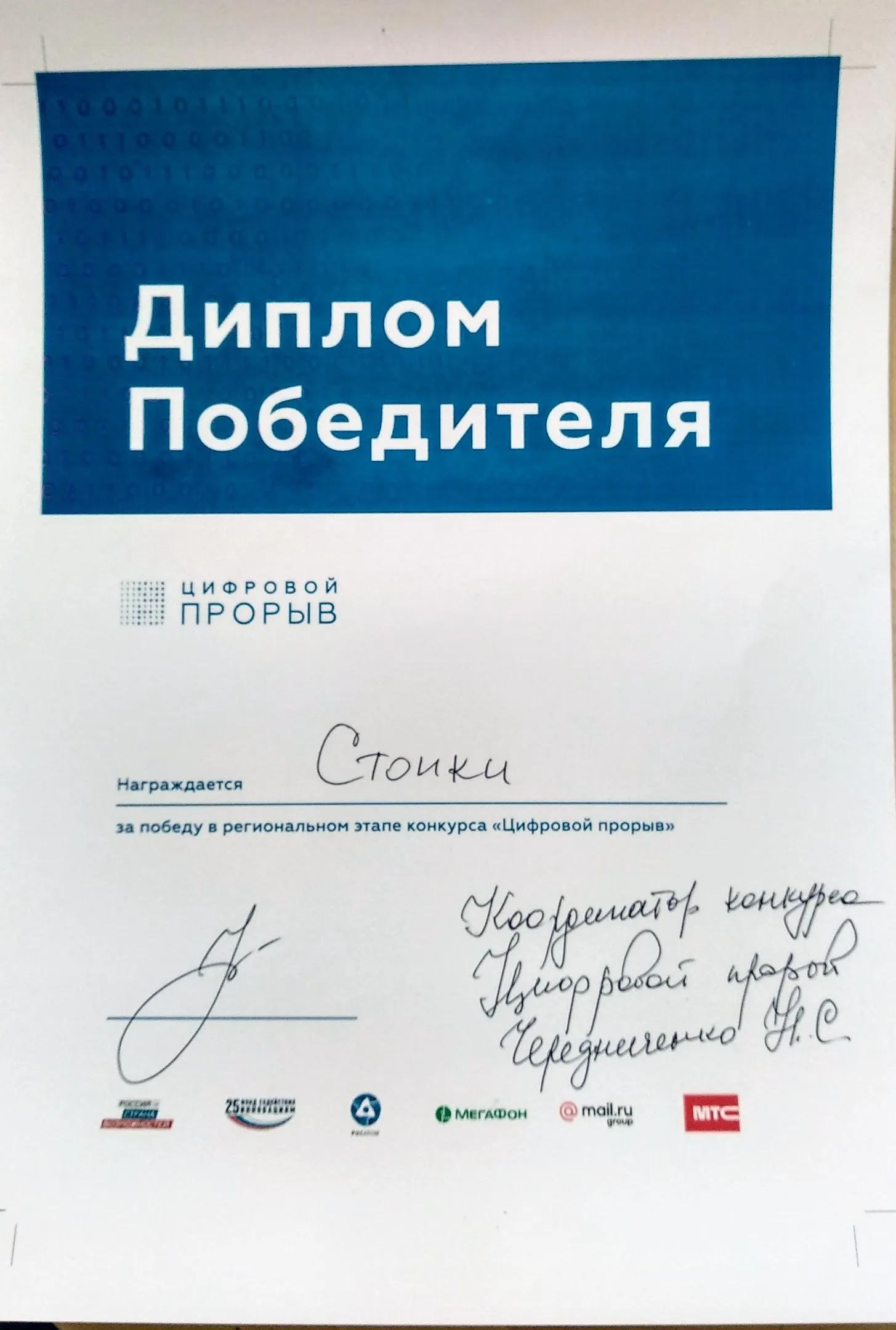
We won the hackathon in our given track and received a valuable prize in the form of a beautiful certificate and a set of stickers from the generous corporations of the country, as well as an offer to go to Kazan at our own expense for the final stage of the hackathon in inconvenient dates for us. Subsequently, and independently of the hackathon, I met with the product manager of EMIAS, Dmitry Grechkyn, thanks to which the developments of the application were used in EMIAS (the Moscow system for recording to a doctor), and I remotely worked on the Blumba project (2019) for Urbanatics, a joint company of Dmitry and the former CTO of EMIAS, but refused to move to Moscow for further full-time work for personal reasons.
Working on the project
Finding a team
The advertising of the "Digital Breakthrough" was everywhere. I had long wanted to participate in a hackathon and was tempted by the presence of FSI, mail.ru, MTS, and Rosatom among the partners, so I passed the first test stage and started looking for a team.
According to the rules, 5 minutes were given for the pitch and demo of the project, and I was not endowed with the talent of fast speech and experience of performances at the hackathon, so I started looking for colleagues who would go to speak instead of me. Opening the chat, I found out that Dmitry, an expert from FRII and a product manager of a German startup, was looking for a team and decided that he was the one who could cover my weak sides at that time.
We got in touch and started looking for developers in the hackathon chat. At first, a full-stack and winner of the last VKHack responded, who invited his friend, but eventually left us because he didn't like Dmitry's role, who couldn't do anything technically.
Then we found Michael; a future frontend developer at Yandex, who wrote on React, and two backend developers, Vlad and Andrey.
Brainstorming and track selection
Several 5 tracks were offered, each with 2 tasks to choose from: State management and services, Housing and urban environment, Healthcare, Education and science, and Transportation and logistics.
By prioritizing with numbers, we conducted a vote within the team, which resulted in the task of gamifying doctors' prescriptions in the Healthcare track winning by a significant margin. We brainstormed and came up with about a dozen ideas, which I formulated as hypotheses.
Expert interview, target audience surveys, and market analysis
A day before the hackathon, I spoke with the mother of one of my friends, who has considerable experience as a doctor, and learned about the algorithms doctors use and asked about the software they use. I was particularly interested in the data format used by doctors and the possibility of integrating it to translate it to patients.
I found out that on the Russian market, applications for communicating with medical institutions are represented by ESIAS in Moscow and Health.ru in St. Petersburg. At the time of publishing this case, they had already caught up with Lifick in terms of functionality, and the first one was not without its influence; however, at that time, they provided the most basic services: booking appointments with doctors, maintaining a local health diary, articles, and contacts of medical institutions.
Dmitry and I surveyed our friends and family and found out:
People often do not follow doctors' prescriptions because:
- Doctors often have bad handwriting, and patients cannot read it.
- Doctors often write prescriptions on a small sheet of paper that can get lost.
- Patients simply forget about the doctor's prescriptions (especially if they have, for example, Alzheimer's)
- Patients do not want to follow the doctor's prescriptions because they are lazy or do not want to do it. Yes, this happens, especially with children and the elderly.
- Doctors often prescribe expensive drugs imposed on them by medical representatives and do not talk about cheaper alternatives. Patients do not always look for analogs on the Internet.
Studying gamification techniques
After reading several articles and remembering my experience, I identified several techniques that can be attributed to gamification:
- Achievements - badges on the profile that are unlocked by fulfilling written conditions.
- Points and levels - points are given for positive results and removed for negative ones.
- HP (Health Points) - the level of health in games. At the time, it seemed like a cool idea, but now I would reject it because it could cause severe patients to fall into depression. Imagine seeing 8 HP out of 100 on yourself?
- Bonuses and chests - for timely actions and reaching a new level, the patient can receive material bonuses: discounts in pharmacies, priority in queues, or free shoe covers :) There may be an element of chance: a window appears with three closed chests, and you have to choose the one that has a prize.
- Interactive with family and friends - people have a spirit of rivalry, and by comparing how close people are treated, a person can be motivated to treat themselves more actively. But this is inaccurate...
Solution
Problem 1 "Doctors' bad handwriting" and Problem 2 "Lost sheets"
Now you no longer need to search for these cursed sheets with medication and procedure assignments: all data is transferred from the doctor's system to ours and displayed in two views: what needs to be done today by time and by the treatment plan calendar.
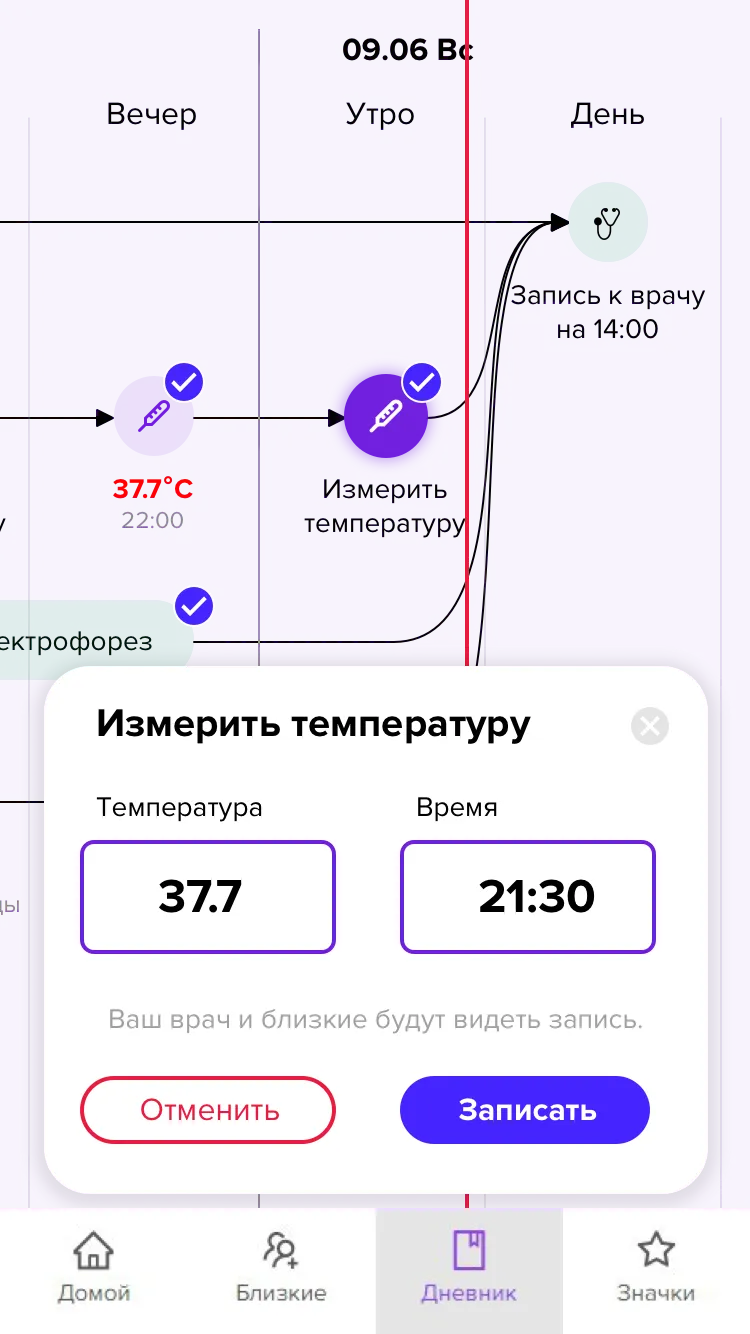
Today's tasks are divided into three groups: morning (before 12:00 PM), day (before 6:00 PM), and evening (before 12:00 AM). This is because the instructions do not have a specific time. For example, you just need to measure your temperature in the morning or gargle before bedtime. Taking pills is usually tied to meal times. More detailed information appears when you click on each item.
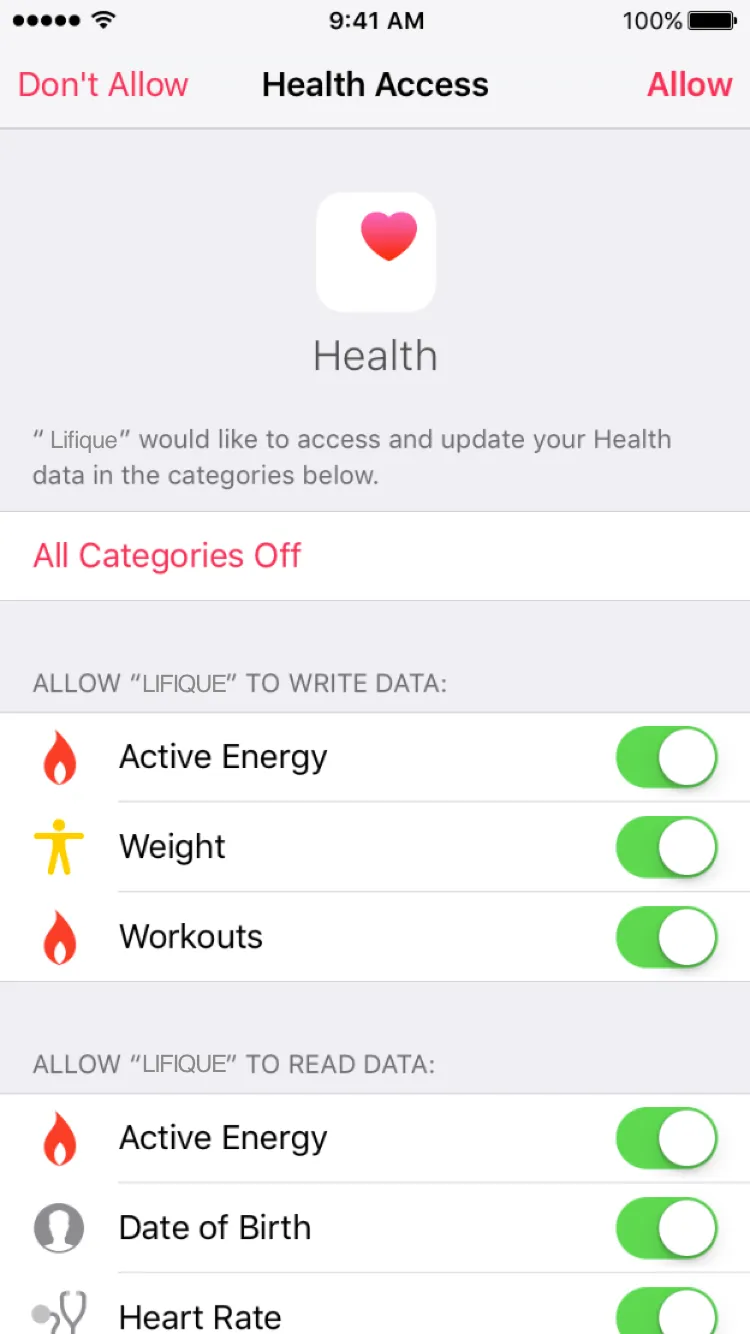
The app integrates with the pedometer on your smartphone or fitness bracelet, so immediately after waking up, a person can receive a reminder to measure their blood sugar or temperature, and this also allows them to monitor their sleep pattern.
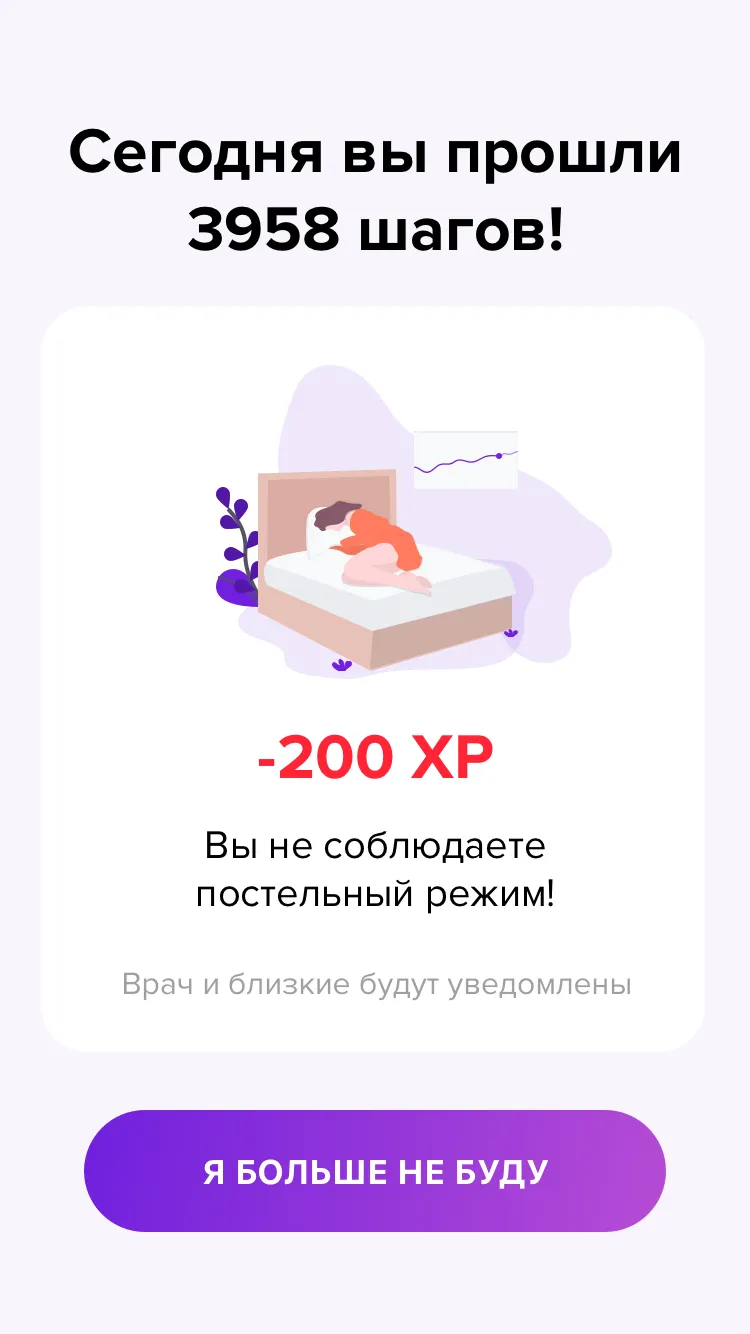
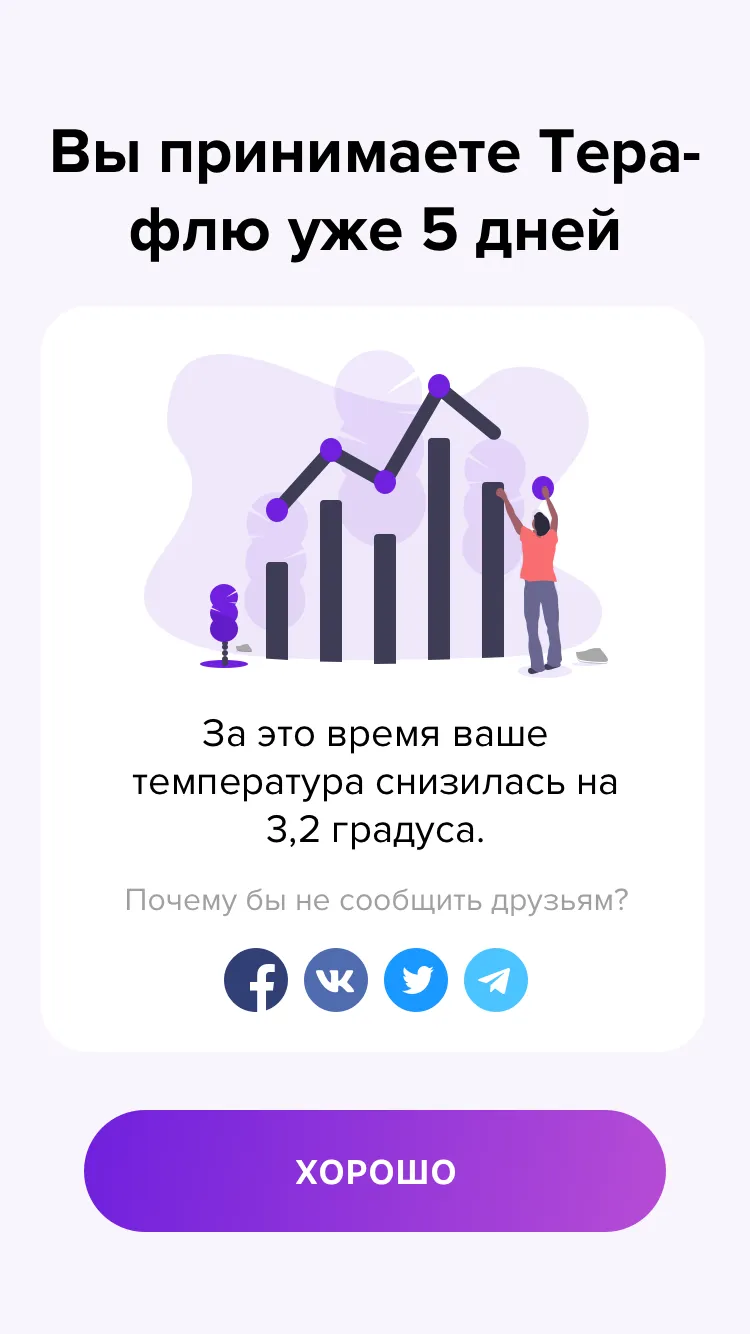
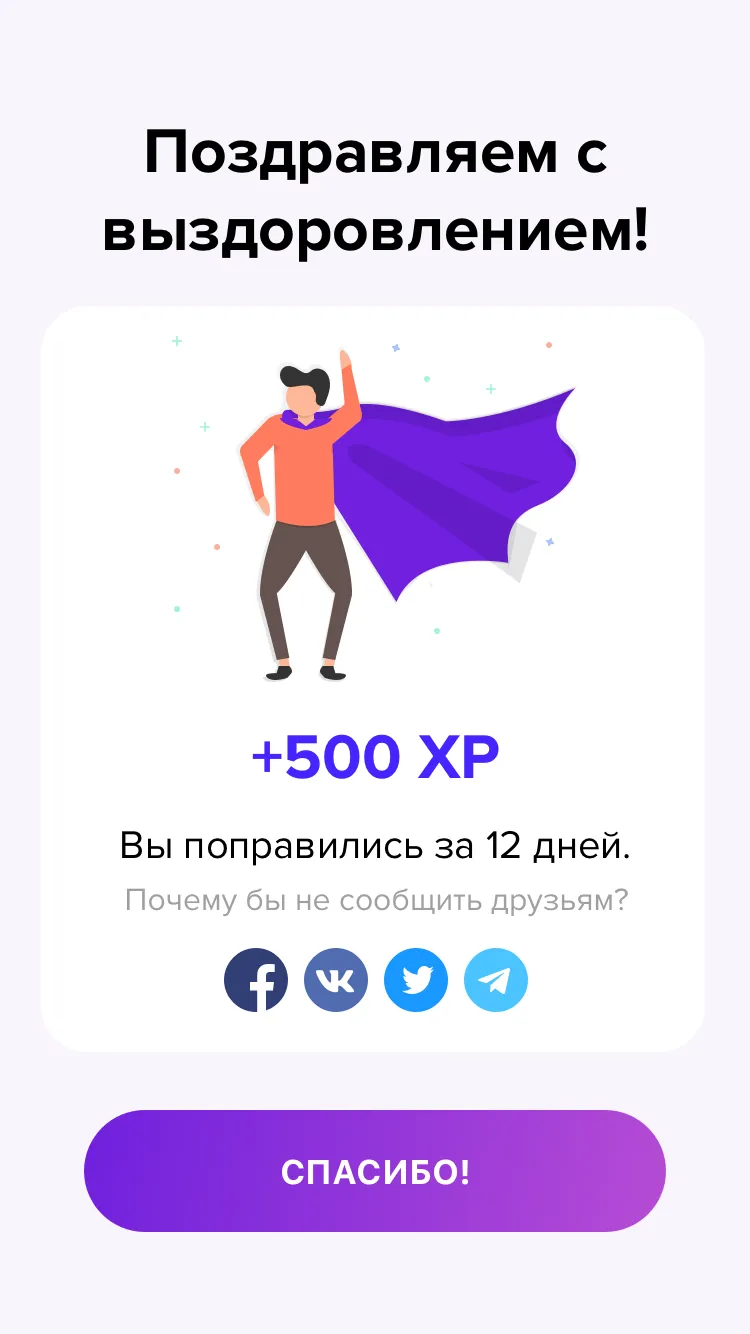
On the same screen, the patient sees their level, experience points (XP), health points (HP), and treatment quality indicator. The health level is calculated from the severity of current symptoms, and the quality indicator is based on the percentage of prescriptions completed on time. Experience points are awarded for completing prescriptions on time, using the app, and meeting badge requirements, and are deducted for late or missed prescription completion.
In the second mode, the patient can see their treatment history from a long-term perspective: when they first experienced symptoms, when they first went to the doctor, what tests the doctor prescribed, when they met with the doctor for the second time, what measurements and procedures they need to perform, and what medications to take.
Problem 3 "Patients forget about doctor's prescriptions"
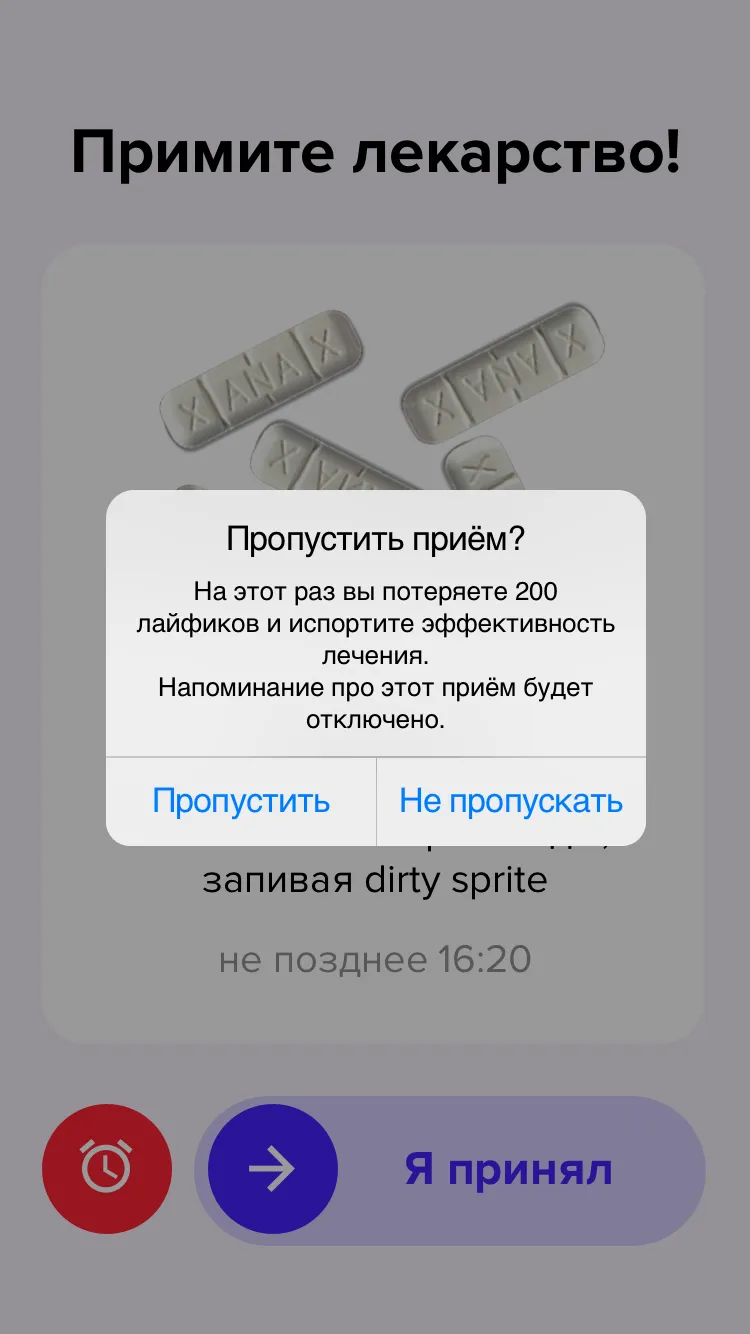
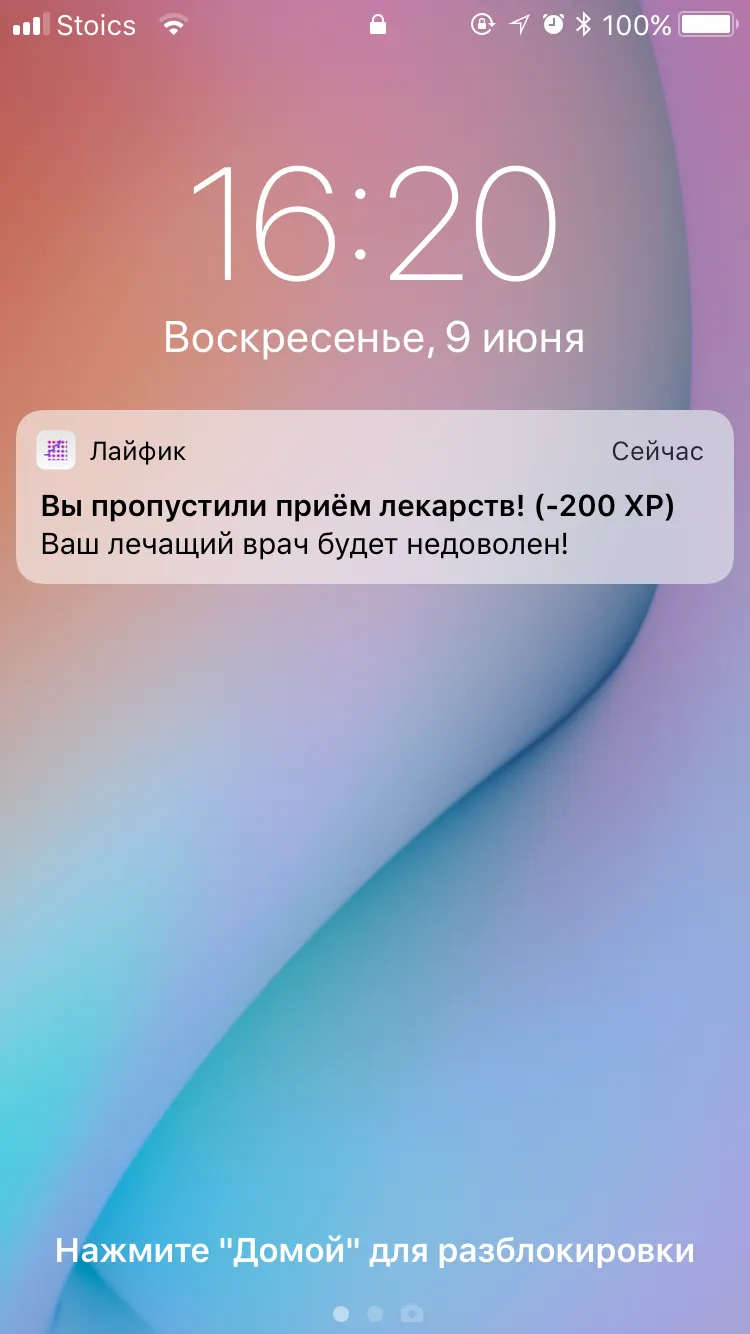
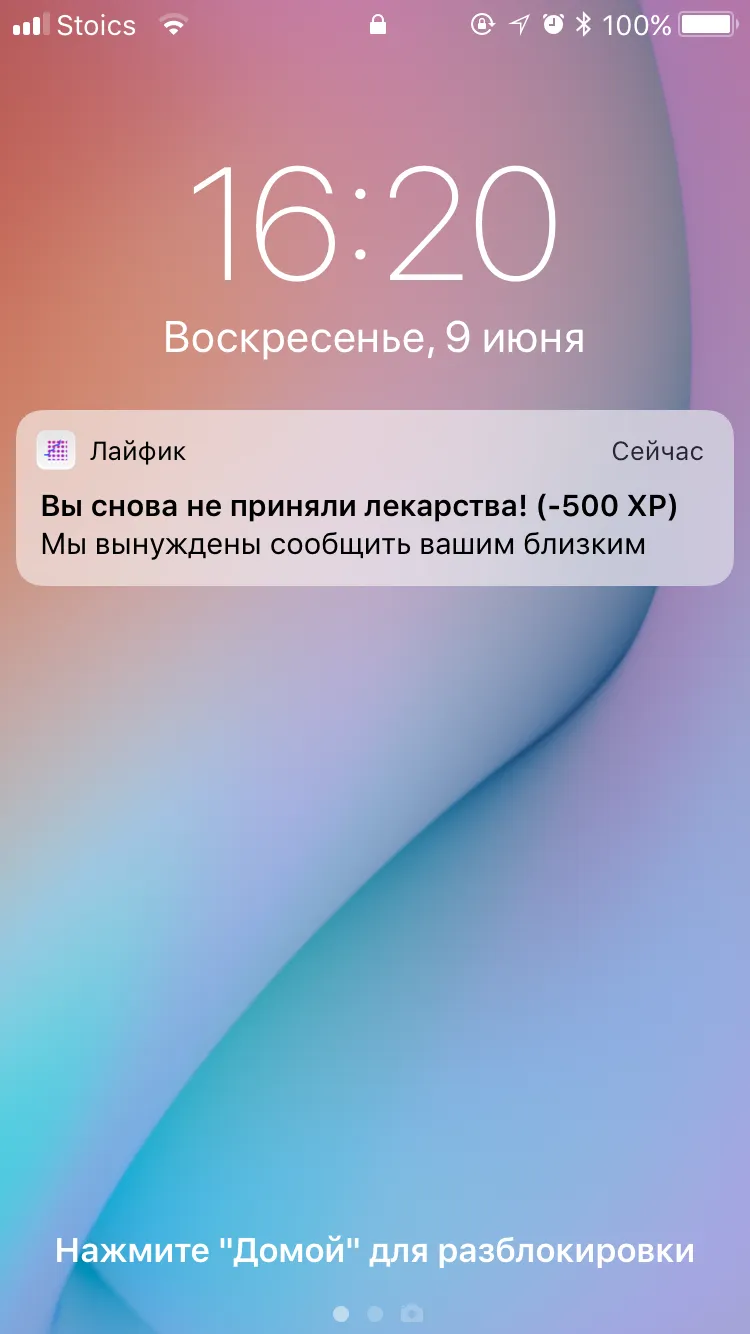
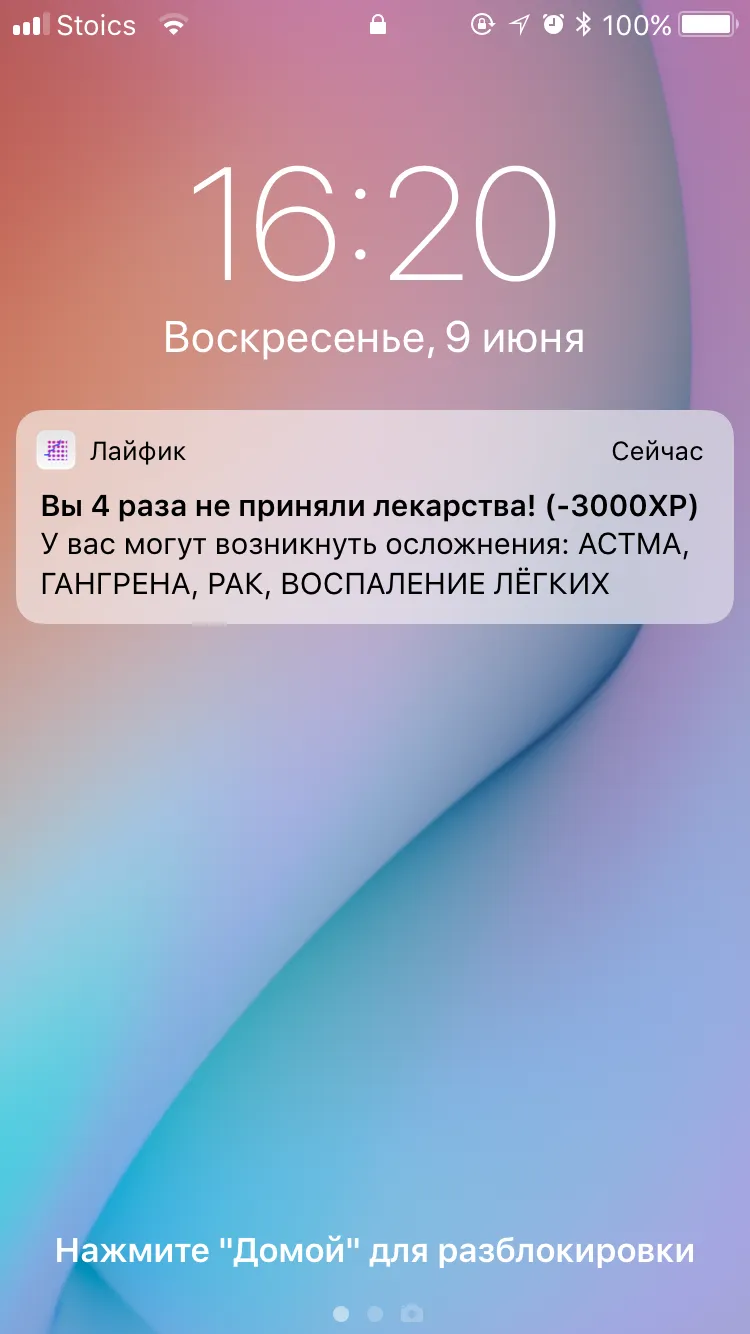
As the time for fulfilling the prescriptions approaches, the user receives reminder notifications. They immediately open on the full screen like a Telegram call. If the patient doesn't take the medicine on time and ignores such reminders, PUSH notifications will appear on the screen. For timely fulfillment of the prescriptions, the user receives XP points, which can later be used to receive valuable prizes and benefits when receiving treatment in public institutions. If the user does not follow the doctor's prescriptions, they lose XP points, and their loved ones are notified.
Problem 4 "Patients don't want to follow doctor's prescriptions"
The more persistently a patient violates the doctor's prescriptions, the more reminders he receives and the more points he loses. The entire history of prescription compliance is visible to family members and the doctor.
Problem 5 "Doctors prescribe expensive drugs"
In our potential backlog, the application has integration with pharmacy partners and analog databases.
The medical name of the drug from the doctor's system enters our system, and it receives possible purchase options through the API. By the way, this is how we could earn commission on sales.
I didn't draw it because it's a hackathon, and everyone can imagine how it might look.
In addition...
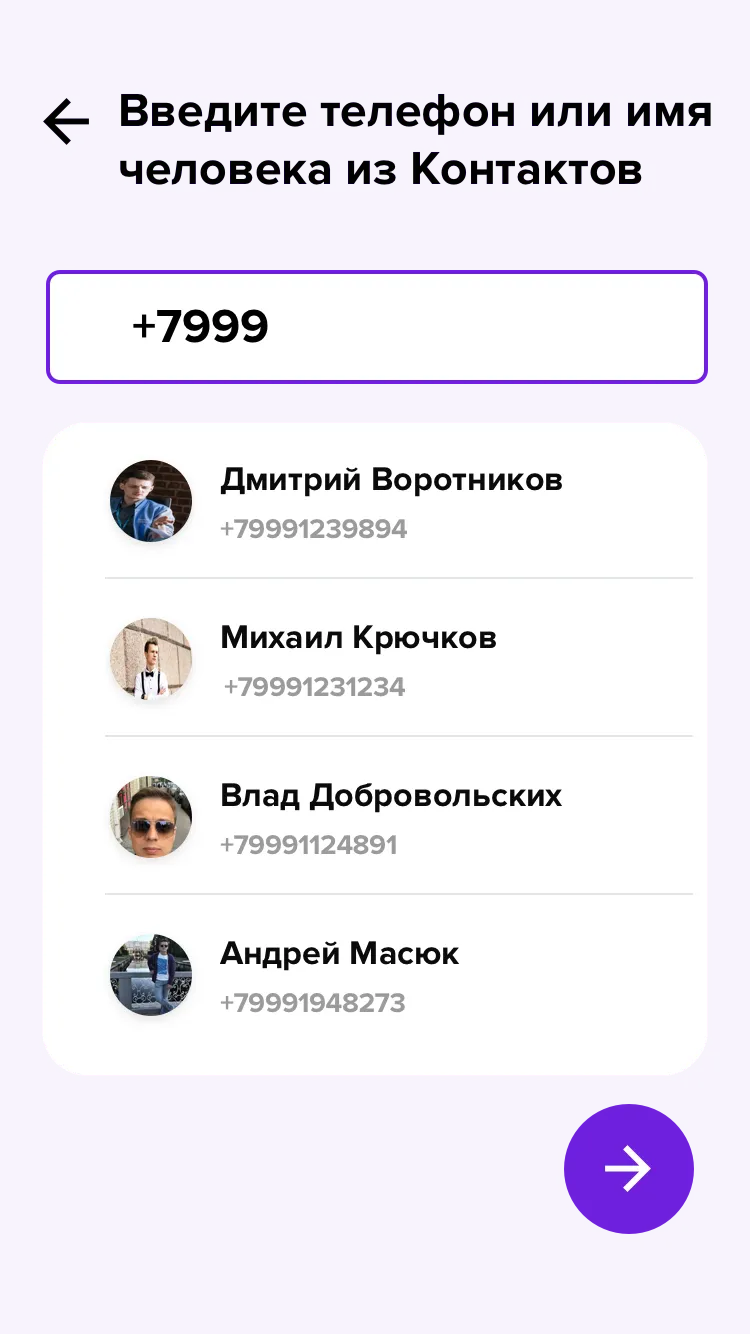
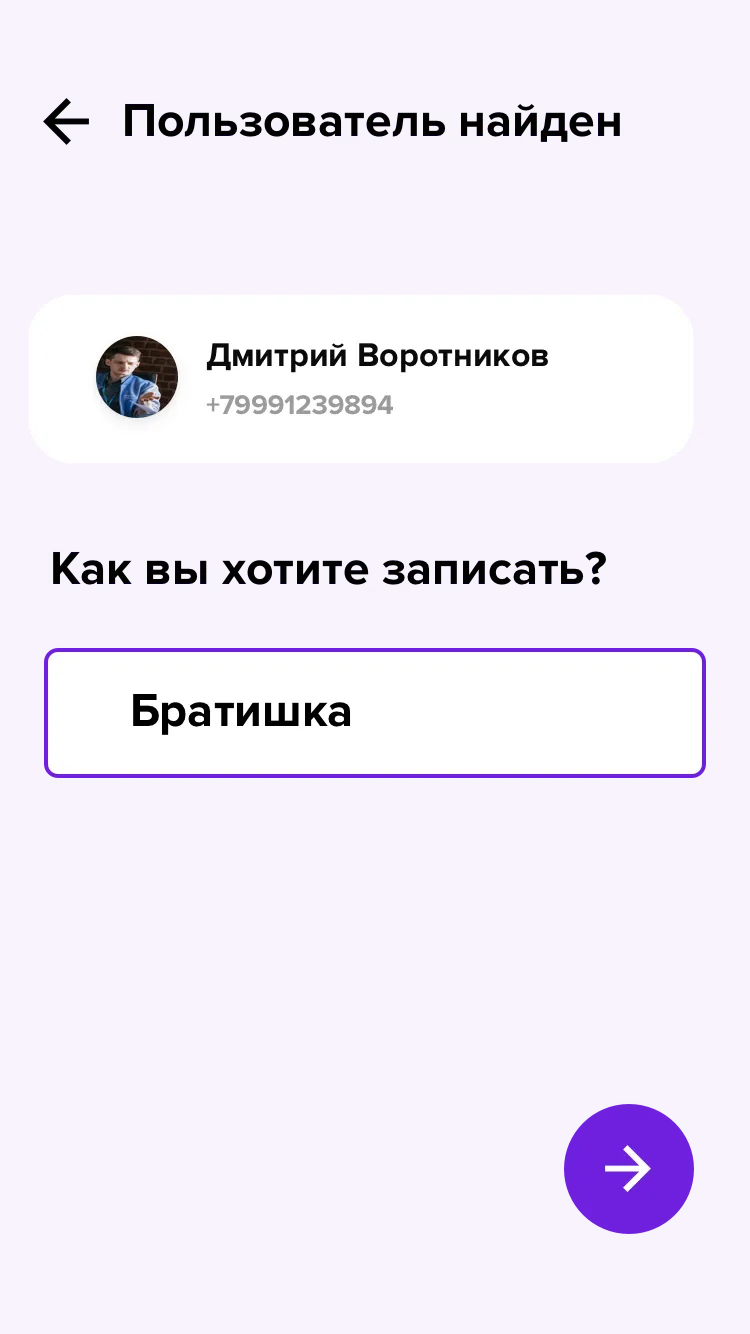
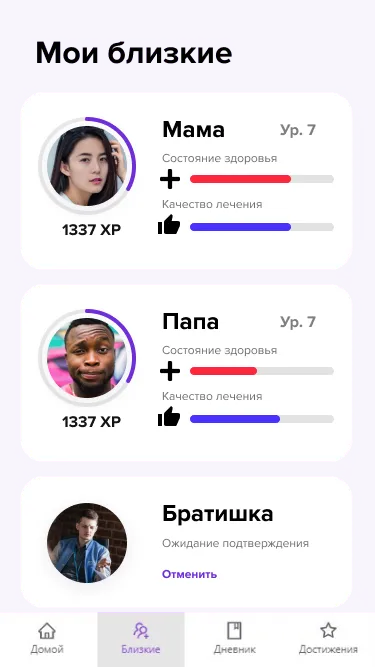
The application allows you to add loved ones to watch over. The free version allows you to add two loved ones, which is the perfect option for taking care of children or elderly parents. To add more loved ones, you can purchase a subscription for 169 rubles per month. This option is suitable for large families, children's homes, hospitals, schools, and sanatoriums.
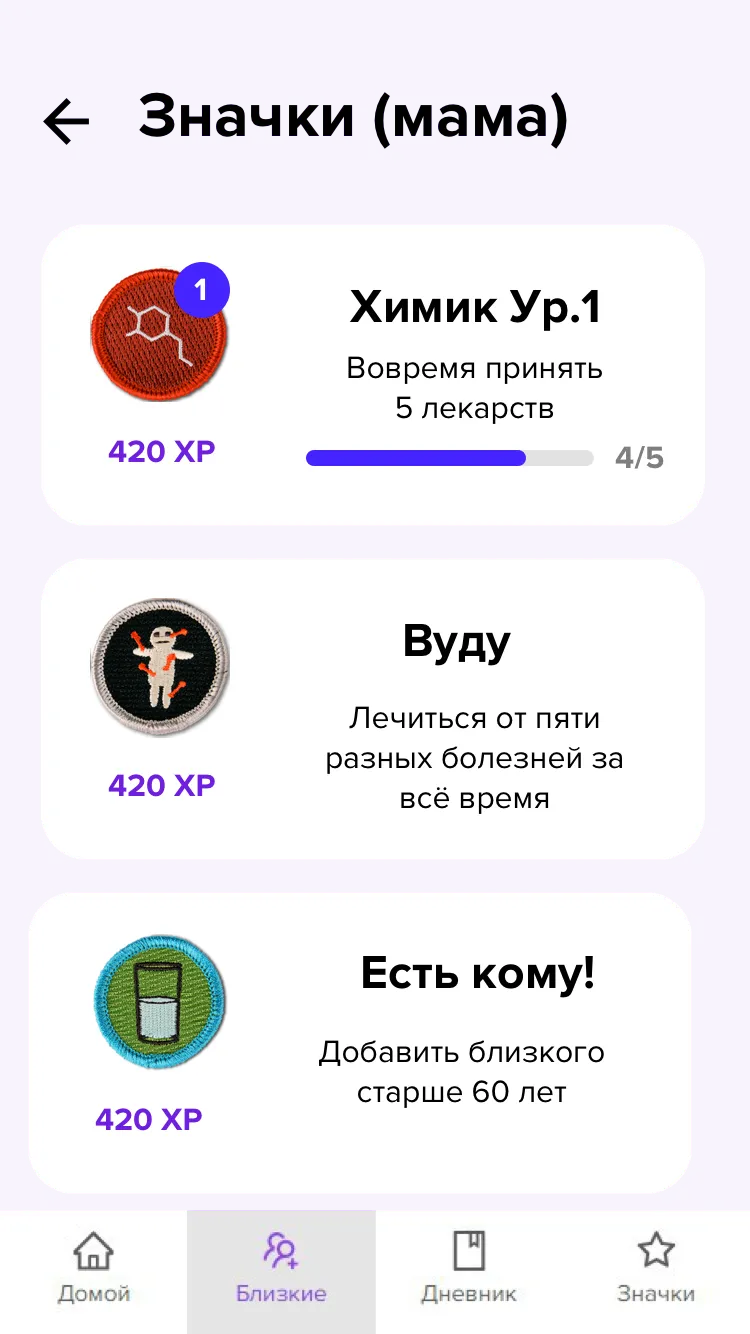
Badges (achievements) are an additional motivation for quality treatment, as completing them earns additional XP points, as well as badges that are visible to all close ones. The conditions for obtaining them are related to the healing process - observing bed rest for the required time, taking medication on time, or taking care of relatives.
Registration in the application is very easy. You don't need to fill in your name, last name, and so on... Just your insurance policy number, date of birth, phone number, and SMS code. All other data will be automatically pulled from the databases.
Artefacts
Here is our pitchdeck (unfortunately on Russian):
Here is Dmitry's Performance:
Result
We won the hackathon in the given track and received a valuable prize in the form of a beautiful certificate and a set of stickers from the wealthiest corporations in the country. We were also offered to go to Kazan at our own expense for the final stage of the hackathon, on dates which were not convenient for us.
Later, and independently from the hackathon, I met with the product manager of EMIAS (Government's Healthcare Portal of Moscow), Dmitry Grechkin, thanks to which our developments and ideas were re-used in EMIAS (the Moscow system for making appointments with doctors). I also remotely completed the Blumba project (2019) for Urbamatica, a joint company of Dmitry and the former CTO of EMIAS, but was unable to move to Moscow for further full-time work for personal reasons.